How to Build a Strong Sales Pipeline: Prospecting Tips That Work [Webinar Recording]
How to Build a Strong Sales Pipeline: Prospecting Tips That Work
[Video Recording]
[Video Recording]
If your reps are still using AI like it’s 2023 (or not using it at all), they’re already behind. In our Sales Shot, I sat down with four sales pros and AI enthusiasts whose teams are actually using AI for sales prospecting, not just talking about it. We’re talking AI-enhanced targeting and prospect research, coaching bots, live conversation sentiment tracking, even inbound AI voice agents that are outperforming humans (yes, really – so, will AI take over sales jobs? That’s a topic for another blog!)
Here’s what went down, and the best AI tools, tips, and prompts you’ll want to steal.
We kicked off with a game-changer: using AI to make sure you’re calling the right people. David Kreiger, SalesRoads, shared how his team uses Clay to qualify leads before reps ever pick up the phone. It pulls company data and uses AI to tell you if a prospect actually fits your ICP, saves hours of manual research, and gets your team focused on the right accounts.
John Buckley (from Sell Better’s Daily Sales Show) showed us Agent.ai, a no-code agent that scores a company for outbound fit with a single URL. He’s trained it on his ICP so it gives a quick thumbs-up or “hard pass.” No prompt writing needed.
Jax Gill (from Inspira Financial) took it even further. She trains ChatGPT to review a company’s website and her prospect’s LinkedIn profile, then find common ground to help her build rapport fast. She even gives it a list of her solutions and asks for possible pain points to reference in the convo. It’s like AI-powered pre-call prep, minus the rabbit holes.
Prompt ideas to steal:
Let’s talk outbound emails. Doug Gibb’s team at Waste Management uses Conquer with GenAI email, which drafts emails based on past conversations and makes sure they don’t miss a promised follow-up. It pulls call and email history straight into Salesforce, so everything’s in one place.
David dropped this gem: if you write more than three emails a week, build a custom GPT. He’s trained his to match his tone and voice. Upload 50 of your best emails, and now your GPT can write in your style. It’s faster, but more importantly, it’s better.
WATCH: How to Build a Custom ChatGPT (shared by David)
James added Oliv to the mix. This tool sends him a cheat sheet before every call with company background, team bios, and even icebreakers. “Ask Chloe about her transition from radio hosting to content marketing” is way better than “Hope you’re well.”
One big reminder from everyone: AI-generated emails shouldn’t sound AI-generated. If your message is filled with fluff, jargon, or emojis in every line, it’s going straight to trash. Your prospects can smell it. Use AI to help, but still bring your brain.
Prompt ideas to steal:
AI isn’t just helping reps do the work. It’s helping them get better at it. David recommends using AI to coach yourself after calls. His reps drop their call transcripts into ChatGPT and ask for feedback. What could I have done better? What questions did I miss? It gives them a score and action steps to improve.
Jax uses AI before the call. She practices objections with ChatGPT in persona-mode. “Be a tough IT Director. Push back on cost.” It gives her reps a safe space to screw up and get better.
Doug’s team uses Conquer to transcribe and summarize every call. It flags sentiment dips, highlights next steps, and scores reps on their delivery. That all feeds into Ambition, where managers get a full coaching report before every one-on-one. And yes, even new managers can coach like pros because the system shows them exactly what to focus on.
We also shouted out Grw AI, a tool for roleplay call coaching. Reps can practice calls and get feedback based on real frameworks. It’s like flight simulator training for sellers.
I also shared how much I love using Fathom for call notes. I just click a button and boom, it gives me a clean sales summary with top pain points, current situation, and next steps. It’s fast, easy, and way more useful than generic transcripts. Use it for internal calls too to help you take notes and create to-dos.
Prompt ideas to steal:
Sales moves fast. Reps don’t have time to dig through notes or scroll LinkedIn for the latest news. That’s where real-time insights come in.
James’s tip: Use LinkedIn Sales Navigator alerts. Ring the bell on your top prospects and accounts. You’ll get notified when they change jobs, get promoted, or post. Instant reason to reach out. That’s prospecting fuel your team is probably ignoring.
Doug’s team uses Ambition’s pre-read feature to prep for coaching. It pulls 90 days of call scores, KPIs, pipeline data, and even sentiment analysis so managers walk into meetings ready. Their AI-based pipeline insights show if deals are stuck, what changed, and where to focus.
David shared Trellus, a power dialer that lets reps pause mid-call to get AI-powered coaching suggestions. It’s like having a manager in your ear without the pressure.
Prompt ideas to steal:
You didn’t think AI was just for outbound, did you? David’s team is using Sela for inbound calls, and it’s outperforming human reps in tier-one qualification. The AI calls the lead, asks 2–3 qualifying questions, and routes the hot ones straight to an SDR. It’s efficient, repeatable, and for simple calls, often better than a live person.
James brought up Sybill, which reads facial expressions and body language during video calls. It sends post-call insights like, “Your buyer leaned back and widened their eyes when you said pricing.” That’s gold for follow-up and helps reps refine their messaging and emotional timing.
And of course, Doug’s team uses Microsoft Copilot, a company-approved, closed AI system integrated into their workflows. Their AI governance committee ensures compliance, which matters when your team is 50,000 strong.
Bonus tip from Jax: Use ChatGPT as your personal hype woman. “Give me a pre-call pep talk.” Or ask it to roast you. Either way, you’re showing up more confident.
Prompt ideas to steal:
READ: Confessions from a Late-Adopter: The Truth About AI for Revenue and Enablement Leaders
This session wasn’t fluff. These are real leaders, using real tools, getting real results. If your team is still scared of AI or waiting for some “perfect system,” you’re already behind.
The final takeaway?
TL;DR – Here are the best AI sales tools and how our panelists are using them:
[Video Recording]
Lauren Bailey, known to many as “LB”, is a sales leader, enablement leader, and entrepreneur and founder of 3 successful brands: Factor 8, providing front-line job training for inside sellers and managers, The Sales Bar, a subscription-based virtual sales training platform, and #GirlsClub, a community and development program helping more women earn leadership positions in sales.
My mission is to walk alongside sales professionals as they develop the skills and best practices needed to find sales success. Our purpose is to show salespeople their true worth as the tip of the spear. I have the pleasure of hosting the best minds in sales every day and creating content that elevates the sales profession.
Connect with me @saywhatsales on Instagram, TikTok, and Twitter. Join us live daily to learn and grow into a top-performing sales professional.
Jacqueline Gill is a Senior Manager in Sales Enablement who’s been at TTEC for 12 years—which in BPO years is basically a lifetime. While her official job is enabling sales, she’s also been known to jump into learning services sales conversations once the executive sellers work their magic. Think of her as the closer with a curriculum. Outside of work, she’s a proud mom of four and a firm believer that AI can help with just about anything—except maybe laundry.
Forty-seven years’ experience managing teams and processes across two primary industries, Retail Department stores and Environmental Solutions/Logistics. The last eleven years have been invested with the Inside Sales Teams at WM, including managing retention and acquisition teams, then progressing to exploring, sourcing, procuring and implementing 3rd party tools and solutions to significantly improve both our customer’s and Sales Team’s experiences.
David Kreiger is the founder of SalesRoads, a leading sales outsourcing firm with over 17 years of experience helping businesses drive revenue growth by building winning sales teams. A seasoned entrepreneur and host of the “Sell Like A Leader” podcast, David champions a philosophy that sales success hinges on talent development and a people-first mindset.
[Video Recording]
Plenty of sales reps love the convenience of email and LinkedIn prospecting. But poorly crafted, AI-generated messages do little to build rapport and trust with your prospects.
That’s why, as much as some people despise it, you have to pick up the phone.
As young reps continue to phase into the sales force, there is a growing challenge for them to get beyond the keyboard. And while the pandemic certainly didn’t help matters, fostering those face-to-face (or voice-to-voice) connections has become more critical than ever.
Suffice it to say that salespeople can’t afford to rest on their laurels. We have to fight harder to build pipeline, persuade prospects, and win deals.
That means moving from behind the keyboard, picking up the phone, and utilizing videos in prospecting.
If you’re ready to crush it, here are seven tips that can help our reps make the most of phone and video in their prospecting efforts.
It’s important to connect with people on social and email, certainly. But think about it: when’s the last time you bought something over email?
Never mind that people are wary of scammers and phishing attempts. No one buys from text on a screen.
People buy from other people. More importantly, they buy from people they trust.
That doesn’t mean you shouldn’t use email. But there are ways to make email more engaging and personal.
For example, emails that use video get a 96% higher click-through rate than those that don’t. It makes sense: video shows off your face, which helps to foster that personal connection.
So if you’re relying on a “spray and pray” approach to email where you’re sending as many as you can hoping for something to stick, just stop. You’ve got way more tools at your disposal.
Just getting started using video in your prospecting efforts is a great first step. But if you really want to maximize your chance of success, then you need to make your videos as watchable as possible.
Most people drop off of videos 70-80% of the way through. So it’s important to structure your video so you get their attention and deliver necessary value as quickly and efficiently as possible—before they click away.
Here are some tips to make your videos more watchable:
The first few seconds of a video are key to getting your relationship with the prospect off on the right foot. One great way to do this: use the prospect’s name.
This goes back as far as Dale Carnegie: people perk up when they hear their own name. When you use their name, you set the tone of the relationship as a familiar one, which increases their likelihood to trust you.
What’s more, when you use a prospect’s name in a video, it’s proof that you aren’t batch-sending messages. You’re taking the time to record a personalized message, which shows that you’re putting effort into building that connection.
WATCH: 10 Tips for Building Human-to-Human Connections on Sales Calls
It’s no surprise that phone calls used in tandem with email help to increase the likelihood of a response.
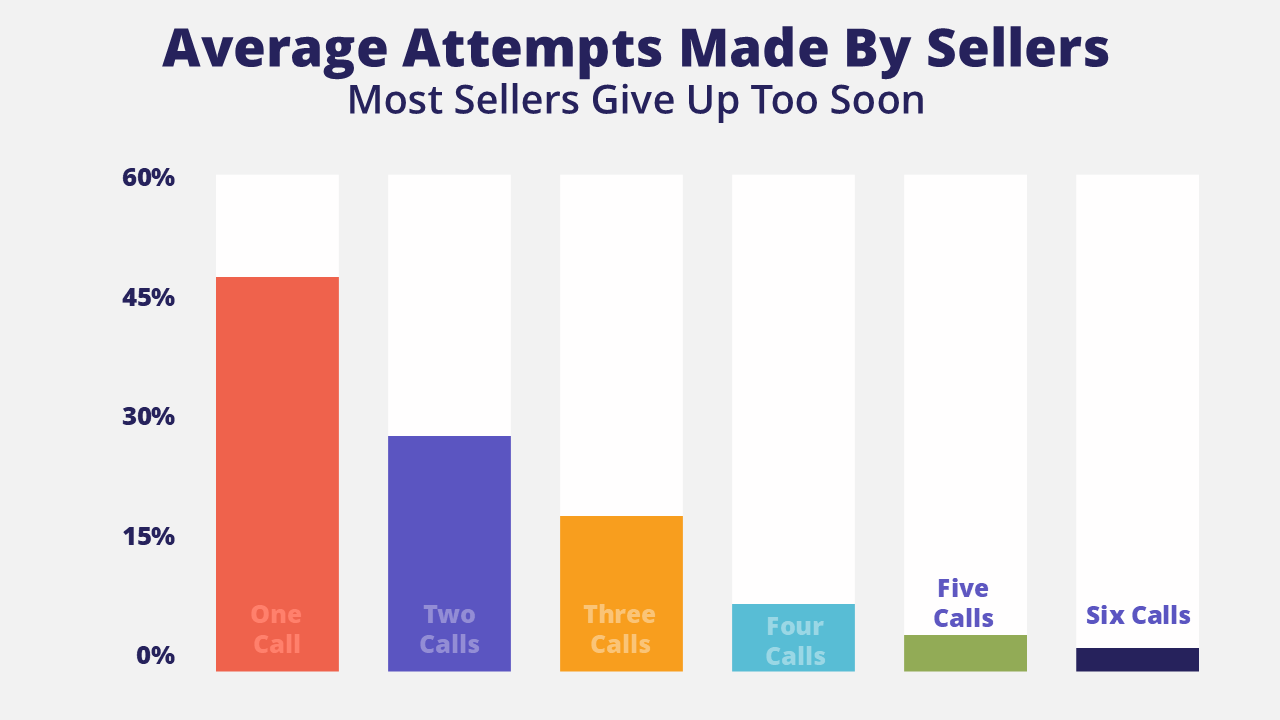
The problem, however, is that only 10% of sales reps make more than three attempts to reach a prospect. Calling more than three times may seem like a lot, when you consider that it takes anywhere from seven to fourteen touches to get a conversation with a prospect, then frequent follow-up is key to making that conversion.
Also remember that while email and social media are powerful tools, they have one purpose: to get you on a call with the prospect. That’s the only way you’ll be able to sell them.
Spray and pray is popular because it’s quick and easy. Even if half the data is incorrect, you’re spending so little time on each prospect that it nets out positive.
But when you’re taking the time to follow up multiple times, record videos, and build relationships with prospects, investing in the wrong people can be a significant time sink.
That’s why it’s important to do your homework. One tip we recommend at Factor 8 is if you get a voicemail, hit the 0 button to find the directory or talk to someone else in the company.
What I tell people is: try to be James Bond for about 10 dials. You’re going to learn something critical that will help you find the right person or provide you with important information that you can then use to land the deal:
Use your personality, talk to people, and get some critical account information that can help you become more successful as you build your relationship with them over time.
READ MORE: How to Use Sales Intelligence to Boost Profits
First of all: sales qualification is not the same as lead qualification. The latter is a marketing indication that a prospect may be ready to buy due to their engagement. Sales qualification is about how much money you can make with a particular account—what’s the potential that they’ll buy from you?
There are a number of factors that go into play here:
One great tip for this: don’t blow past the gatekeepers! In your haste to get to the decision maker, you may end up missing the opportunity to gain some vital information on the company that can help you tailor your video and phone communications.
READ MORE: How to Build an Account and Lead Qualification Strategy
If marketing could source leads and close deals on their own, we wouldn’t need sales.
The reason you have a job is because salespeople can do something marketers just can’t. You weren’t hired to send canned messages. Marketing can do that more efficiently than you.
Salespeople are there because personality makes a huge difference in how prospects feel about potential vendors. For many businesses, it’s the people that are the differentiator between themselves and their closest competitors.
So let people get to know you. You’ve been hired to be a personality. Use it!
If your sales team struggles to use phone and video effectively, Factor 8 can provide the training and resources needed to get everyone up to speed. Learn more about our training and coaching services here.
Freight and logistics sales has undergone a massive change in the past few years. As companies embrace digital transformation, in-person sales meetings are falling in frequency. So you’re probably spending a lot more time on the phone than before.
This can be…how should I put it…intimidating? 😱 Or at the very least, uncomfortable?
So here are six logistics sales tips to help you crush cold calls and reach those tough-to-crack prospects.
(Psst! Interested in logistics sales training? We can help! Contact us today.)
For sales calls, the third time isn’t the charm. You have to call someone at least six times before you get a response. Not just for cold leads, but warm leads too.
People are shocked when I say this. But think about it: when was the last time you called someone once and immediately got a response? (I’m gonna guess it doesn’t happen that often.)
Over 36% of purchased leads receive no sales contact. And it’s not because reps are lazy. It’s because we’d rather go after the low-hanging fruit for immediate results. But there just isn’t enough low-hanging fruit to go around. If you want consistent results, you’ve got to climb a little higher. That’s why I recommend 10 touches for A leads, 8 for B leads, and 6 for C leads…as a bare minimum.
READ: How to Build an Account and Lead Qualification Strategy
Yes, you read that right. Every time. It’s easy to ignore a missed call. It’s harder to ignore several missed calls, multiple voicemails, emails—you get the picture. If you’re going to invest the time in making several hundred calls a week, make it hard for them to forget it.
Think of the voicemail as a resume. It’s there to show who you are, what differentiates you, and what value you offer. If you put it in front of them enough times, the prospect is more likely to pick up. Once that happens, then you can start selling.
WATCH: How to Leave Voicemails that Get Returned
In a virtual environment, sales cycles can be longer than traditional, F2F approaches. So when you make 100 calls in a day and don’t hear anything, don’t worry! Eventually, you’ll call someone enough times and they’ll pick up (even if it’s because they feel guilty 😉). At that point, you can make them feel like they’re the one doing you a favor by taking the call.
READ: Quick and Effective Voicemail Scripts
Salespeople often talk about “engaging prospects.” But what does “engage” actually mean? It’s simple: An engaged prospect is a talking prospect. And what’s the best way to get someone talking? Ask them a question.
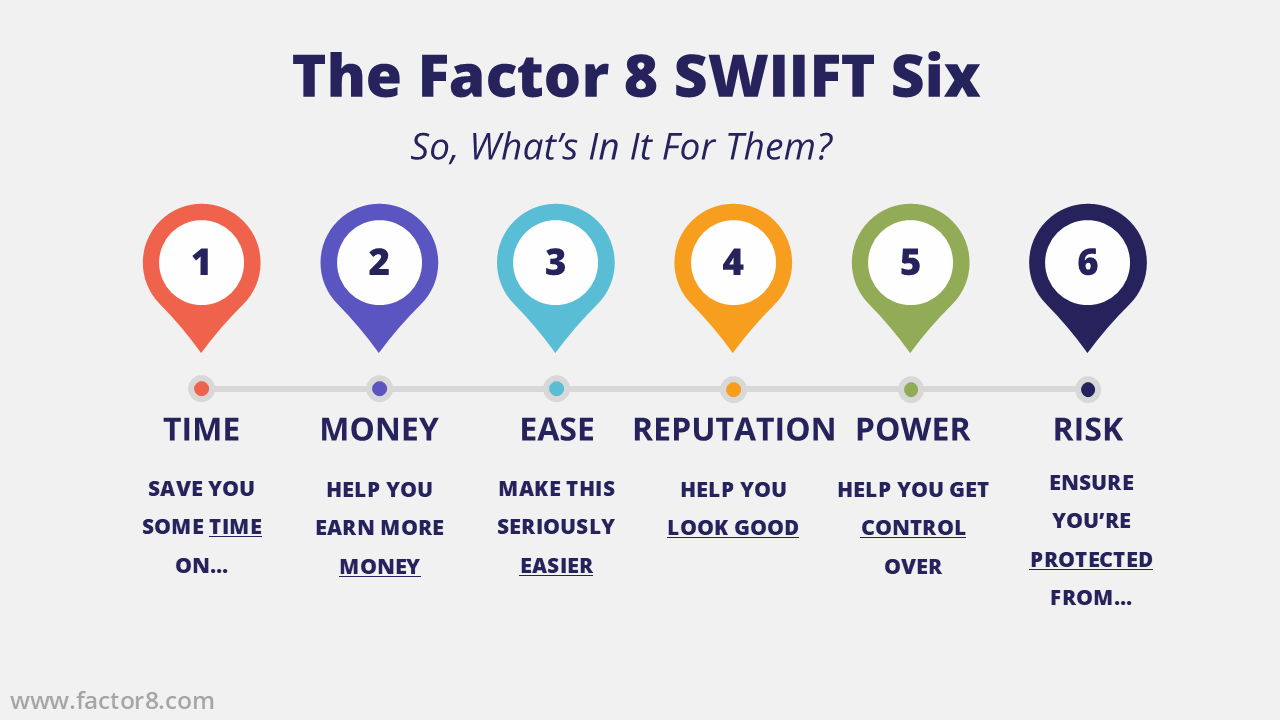
So instead of going through your usual dog-and-pony show, use the SWIIFT℠ methodology (So, What’s in it for Them?) to flip the conversation around. SWIIFT℠ gets the prospect to answer 2-5 short, closed questions to get the conversation going. This helps you build the necessary rapport and understand the prospect enough to demonstrate your value.
READ: The SWIIFT℠ Selling Methodology
Be real: how many times have you jumped at the chance to “check in” with a sales rep? Yeah, me neither.
If you’re going to ask for your prospect’s time, you better give them a good reason to get on the line with you. So start brainstorming how you can add value to them:
Don’t just call to sell something. Call to add value…real value.
DOWNLOAD: 20 Value-Add Reasons to Call Your Customers
In virtual sales, the average first call is three-and-a-half minutes. If you last that long, you’re doing great.
You may wonder: what could I possibly get done in such a short amount of time? In reality, you only have to do three things:
Commitments change depending on where the buyer is in the journey: set up a demo, loop in other stakeholders and decision-makers, read over a contract, or even sign and onboard. But every call you make needs to involve getting some kind of commitment. Then, you use that commitment to bridge to the next call.
So there you go. Follow these six tips, and I promise you’ll be crushing those sales calls. Happy selling!
Can you guess what percent of sellers HATE prospecting?
(Hint: it’s not 100% – that was my first guess) But it is the majority of sellers…
Yet 100% of managers DO say that sellers need to prospect more (and be better at it – if you’re one of those managers, contact us. We can help 😉)
So what can you do?
It all starts with planning.
In order to get better results without feeling like you’re wasting hours, you’ve got to put some work in ahead of time. But have no fear, there is a way for you to plan for prospecting without being part of that 64% hating it along the way (and if you already are, maybe this article will change your mind!)
Check out these top 4 sales prospecting strategies to help speed things up.
WATCH: Sales Shot – Power Prospecting
Yep, read it again. Think about it this way: what’s your main goal when you pick up the phone? The obvious answer is to entice them to set up meeting 1. But that’s probably a pretty unlikely accomplishment with just one phone call.
What’s the most likely case? You’re going to get their voicemail!
READ: 4 Quick and Effective Voicemail Scripts
With speed in mind, think about the key elements you need to craft and leave your voicemail during your prospecting. Here’s a list of the usual suspects with a breakdown of why you do or don’t need them.
READ: Best Sales Scripts To Get A Buyer’s Attention
So to summarize – when you pick up that phone, know their name, have your value prop handy, your call intro, and a voicemail if all else fails. Save the image below to help you remember.
Make it easier on yourself by grouping your leads together. Here are some quick categories to organize them by:
READ: Build A Lead Qualification Strategy
When you do your research, your first instinct might make you feel like you HAVE to give individual attention to every single person and potential lead. Guess what? You don’t!
Easily group call goals, qualify & explore questions, voicemail scripts, and your SWIIFT intros.
What should you individualize? The rapport builder – it’ll be unique for each person.
Boom, you just saved yourself a whole lot of time!
Be nice to future you! By taking better notes and including specific details about the voicemail you’ve previously left, you’ll never be left scratching your head wondering what you’ve already done and having to double back.
Here’s what to include:

Seems like a no-brainer, right? You always want to call to add value to your prospects. Try the following:
Prospecting is always going to be a numbers game. Remember: it takes 6-9 times to get to 90% of the people on your list! Put in the work – but don’t worry about putting in extra.
If you’ve been a leader in the sales industry for a while, chances are this isn’t the first recession you’ve worked through. Surviving a recession and leading your sales team through it is no easy feat, so if you’ve already powered through at least one, take a moment to pat yourself on the back.
The good news about recessions is that they don’t last forever. The bad news? Those leaders who have never been through it don’t know how to effectively navigate one now!
For many sales teams, they are chock full of young reps and managers who may be experiencing it for the first time. To feel the effects of it or constantly see headlines on mass layoffs across the board in just about every industry can feel scary, especially if their numbers are dropping and they’re starting to struggle.
We recently hosted two executive round table sessions and pulled in both existing clients and leaders from multiple industries for a collaborative session. We covered how the impending recession is affecting their sales teams, how they’re responding, and what changes they’re using to pivot and survive in a tough economy.
We had tons of great feedback and insights to unpack, so here are our key takeaways!
Sounds simple, right? One of the best things you can do right now is combine old-world tactics with new-world sales coaching.
Think about it like this: When’s the last time you had a lunch and learn? How often are you doing 1:1 coaching with your managers? Do they know what approach to take to train reps how to be confident and face newer, stronger objections that are popping up due to budget cuts?
A lot of managers (whether under their own or internal pressure), may be falling back on old tactics that are actually DE-motivating their teams. You can help them be better at coaching their people and working through this together.
Emphasize a focus on solving problems that can be accomplished immediately versus meeting quotas or goals that are too lofty in this environment. One tip could be as simple as roleplaying on overcoming rebuttals with reps: coach them on how to navigate following up in the environment of a recession.
DOWNLOAD: Call Coaching Cheat Sheets
One of the few positives of a recession? This is an all-hands-on-deck moment for your company – and that means it’s time to get comfy collaborating and engaging with other departments and personalities in the workplace.
One of my colleagues recently highlighted the success they’ve had breaking into new industries by pairing up two different departments to tag-team and educate each other for higher chances at their rep’s success.
If you have a dedicated team for researching, for example, have them send over their notes and top takeaways so your reps aren’t going into new territory blind. Consider strategizing meetings to share knowledge on nailing presentations, goals, and processes.
By investing time in your employees and encouraging them to do the same with each other, you’re not only creating a positive and collaborative environment, but you’re also utilizing existing resources and ensuring reps aren’t doubling down on the amount of work they’re taking on.
READ: 6 Tips to Improve Marketing-Sales Alignment
It’s go-time when it comes to value props. You CANNOT lead with anything else in this environment, especially when executives like the CFO are almost always involved in the process these days. Clearly understanding the need and aligning your solution in a way that generates confidence and a clear path to success with ROI is a must.
Coach your reps to strategically position the value you’re offering. How will you generate ROI to be WORTH the long-term investment? What does your customer or prospect really care about right now? What are you helping to mitigate or solve for an executive’s involvement?
And honestly, in some cases, ROI isn’t the only way to lead and showcase value. Teach your reps how to reswizzle value props with a focus on reducing risk – show what you’re saving them and keep the angle on “safety” in uncertain times.
(People want Advil, not vitamins right now!)
WATCH: Build Pipeline And Keep Selling During A Recession
Want to know what something easy and totally free you can do to prime yourself for success in the future with your prospects?
LISTEN TO THEM!
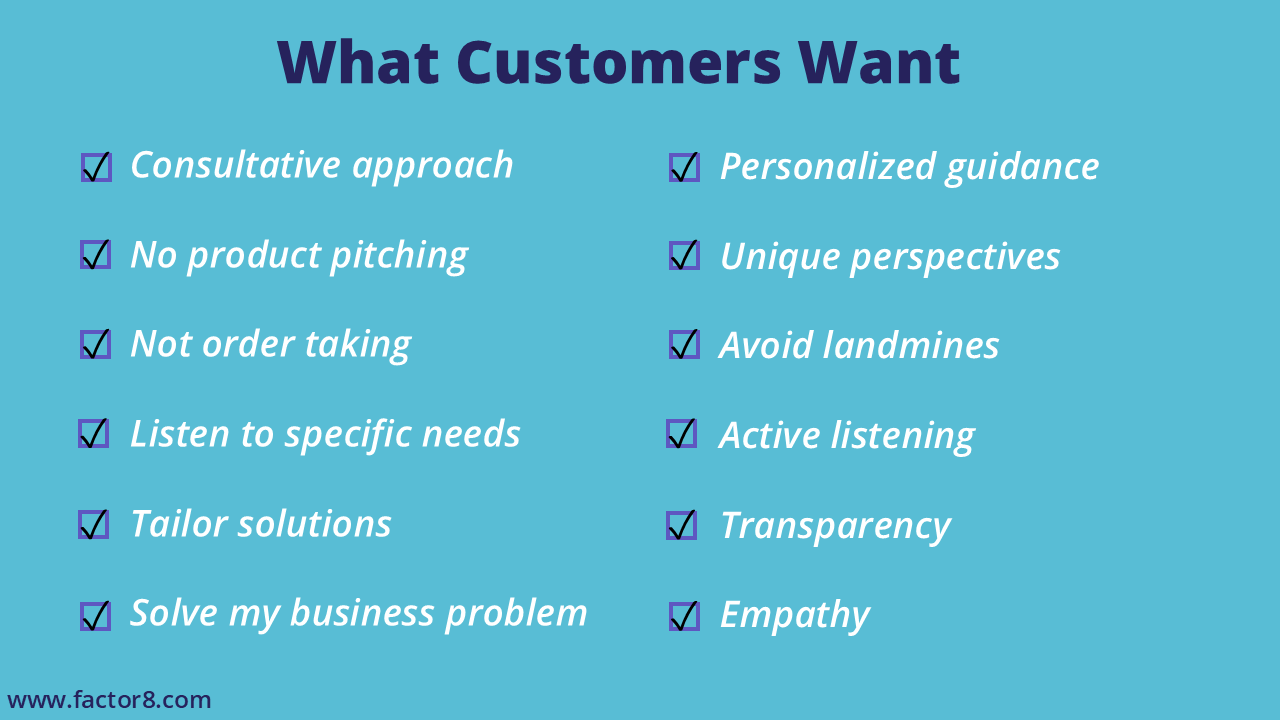
Right now, people want to talk to those who can actually help with their problems rather than hear a canned sales pitch. The easiest thing to do is have conversations with your prospects and customers. Not sales conversations – just regular old conversations. Many sellers are often so focused on themselves that they miss the opportunity to build a relationship and understand their customers.
DOWNLOAD: 20 Value-Add Reasons To Call Your Customers
If you’ve put in the work to break into other industries or had options that have been on the back burner, now may be the time to get that rolling when it comes to prospecting and discovery. Cast a wide net!
But for others, it can also mean being more purposeful as to where you are investing your time and energy and having your reps focus their prospecting efforts. Narrowing the scope can be just as effective or work better for certain industries.
I recently wrote an article about this encouraging sales teams to turn DOWN their lead qualifications for filling the gaps in their funnels and pipelines. Defining existing regions or expanding into new industries is a quick way to generate a whole lot of new leads.
One other tool you can take advantage of is hyper-segmenting. See if you can identify buying patterns from existing customers (try sending out surveys, for example) and get the knowledge you can use immediately to build out your funnel in quick and scaleable actions.
Don’t be afraid to consider all the options when it comes to the best tactics for your team to drive revenue generation! The payoff will be worth it, whether it means breaking into a brand-new market OR staying hyper-focused on the avenues that bring guaranteed results.
Bottom line: don’t stop your activity, just change your activity.
No matter what sales role you’re in, it’s pretty likely that folks are feeling pressured or stressed about meeting quotas. Even your top performers are likely feeling the heat here.
One awesome tip we discussed was having sellers focus on pushing products with a higher profit margin to help both the company AND filter the extra $ through to the reps selling them via a commission. Sharing the wealth does wonders for morale!
This is a great opportunity to come up with new sales incentive plans to ensure you’re keeping talent motivated and satisfied. You can help them stay engaged and on track to hit new goals – for example, can you come up with a way to celebrate awards? How about contests rewarding top skills like tenacity (having a longer close rate) or the most number of follow-ups achieved?
Make it fun! This is your opportunity to be as creative as possible.
READ: Changing Sales Incentives During A Recession
There you have it – even in a recession, you have tons of different angles to help boost sales team morale, fill your pipeline, and continue building relationships with your customers and prospects.
I guarantee whatever you are doing now is going to help TREMENDOUSLY when things get back to “normal”. Put in the work and hang in there!
As leaders, one thing we’re all aware of is how tight budgets are – both yours and your clients.
Listen, I love getting paid for deals upfront. Cash flow and payroll are real my friends. But I also like closing deals. When times are uncertain, it needs to feel much less risky for prospects to buy now. Have you talked with your finance team about what risk you can shoulder so your prospective clients don’t have to? For example:
Talk to your sales reps about the exact objections they’re getting out there.
What solution would help?
Important note: if they can’t tell you, they need some help.
READ: Changing Sales Incentives During A Recession
Here’s where to focus your coaching:
Work all four steps in overcoming an objection to get the best intel, and make it easy for reps to share. For example, you get an email for every price objection with a link to the call recording and the rep’s feedback on the root cause (trust, but verify, right?)