
Call Bridging

7+ Sales Prospecting Tactics to Build Pipeline Fast
Prospecting is the part of sales most reps would happily outsource, avoid, or procrastinate on if given the chance. And the data backs that up.
In our most recent research, 60% of reps say prospecting is the hardest part of the sales cycle. No wonder pipelines feel harder to build than ever.
But here’s the catch.
Prospecting might be uncomfortable, time-consuming, and frustrating, yet it’s still the single biggest driver of pipeline.
No prospecting means no conversations.
No conversations means no meetings.
No meetings mean no deals.
And no deals means a very awkward forecast meeting.
What makes this even more painful is that most sellers are putting in the time. They’re just spending it in the wrong places.
Our data shows reps spend the majority of their prospecting effort on email, social (hello LinkedIn), and texting because it feels safer and easier. Less rejection. Fewer awkward moments. More boxes checked.
But when you look at the meetings that actually get booked and the deals that actually close, the story flips.
The phone consistently ranks as the most effective channel. Leaders see this gap clearly too. Nearly 40% of sales leaders say they wish their reps would pick up the phone more.

And buyers? They’re not nearly as anti-phone as sellers think.
82% of buyers say they’ve accepted meetings after multiple cold calls, and 74% say they choose the seller who is first to add value.
In other words, prospecting isn’t broken. The way most sellers are taught to do it is.
Prospecting isn’t about grinding longer hours, blasting more messages, or hoping something sticks. It’s about prepping smarter, planning your day, and knowing exactly what to say and why before you ever pick up the phone.
Why Prospecting Feels So Hard Right Now (And Why You Still Can’t Skip It)
Selling today is loud.
Buyer inboxes are flooded. Spam filters are smarter. LinkedIn DMs are packed with copy-and-paste messages. AI has made it easier than ever to send more outreach, which means buyers are spending more time ignoring it.
At the same time, buyers are busy. Internal meetings. Budget reviews. Tool fatigue. Decision fatigue. Even when interest exists, attention is scarce.
Sellers feel this every day. In our research, reps are not asking for more pressure or more meetings. They want tools that make their job easier and training that helps them say the right thing. Managers feel the strain too. Burnout is real.
So yes, prospecting feels harder than it used to.
But here’s the part that hasn’t changed. You still can’t skip it.
Prospecting is how pipeline starts. It is how conversations begin. It is how deals enter the funnel instead of magically appearing halfway through it. What has changed is that the old spray-and-pray approach does not survive in this environment.
More emails will not fix it.
More automation will not fix it.
And “just try harder” definitely will not fix it.
Modern prospecting requires intention. Knowing who you are calling, why you are calling them, and what you are trying to accomplish in that moment. Not jumping straight to a pitch. Not forcing a meeting ask before you have earned it.
The answer is not more activity. It is better preparation.
The Real Goal of Prospecting (And Why Most Sellers Get It Wrong)
Most sellers go into prospecting with one goal in mind. Book the meeting.
On the surface, that makes sense. Meetings lead to opportunities. Opportunities lead to deals. Deals make quota feel slightly less awful.
But this mindset is where prospecting starts to break down.
When sellers treat every call, email, or voicemail like it has to end in a meeting, messages get heavy fast. Value props show up too early. Case studies sneak into voicemails. Discovery questions get asked before a buyer has even agreed to talk. Outreach starts sounding like a pitch instead of an invitation.
It also makes rejection feel personal. When the goal is “get the meeting,” anything short of a yes feels like failure. That wears people down quickly, especially when most prospecting attempts will not convert on the first touch.
Here’s the shift.
The goal of prospecting is not to book the meeting.
The goal is to start the conversation.
You cannot get home if you cannot get on first.
Prospecting works when you break it into smaller, more realistic goals.
- Get their attention
- Get a response
- Get them talking
Once someone replies, calls you back, or engages, you have earned the right to sell. Not before.
This is why shorter messages work better than longer ones. Why curiosity beats credibility early. And why sellers who focus on engagement instead of pitching consistently build more pipeline with less effort.
Prospecting is not about forcing an outcome. It is about opening the door.
Prospecting Emails, Voicemails, and Call Intros Are Not the Time to Sell
This is where a lot of sellers lose momentum before they ever get started.
Early outreach is not the place to pitch. It is not the place for your value prop, your customer logos, your case studies, or your discovery questions. When sellers try to sell too early, buyers do exactly what you would do. They scan, decide “no,” and move on.
The purpose of early outreach is simple.
Get noticed. Get a response. Start a conversation.
That is it.

When sellers treat prospecting like a mini sales presentation, messages get long, tone gets salesy, and response rates drop fast. Shorter, lighter, more human outreach consistently works better because it respects the buyer’s time and attention.
Think engagement first. Selling comes later.
Speed Wins. Shorter Messages Work Better.
One of the biggest prospecting myths is that more preparation always equals better results. In reality, over-preparing often slows sellers down and keeps them stuck in research mode instead of having real conversations.
Speed matters in prospecting.
Shorter messages are easier to listen to, read, and respond to. Buyers are far more likely to engage with something that feels quick and low effort than something that feels like homework.

This applies across every channel:
- Short call intros beat long explanations
- Short voicemails beat detailed messages
- Short emails beat value prop dumps
Your job is not to explain everything. Your job is to earn the next step.
Phone Still Works. You Just Need Support from Other Channels.
Despite how uncomfortable it feels, the phone continues to outperform every other channel when it comes to booking meetings and closing deals.
That does not mean email, LinkedIn, or text are useless. They matter. They support the phone. They reinforce familiarity. They help warm things up.
But they work best when they are part of a plan, not the plan.
The strongest prospecting strategies use multiple channels together, with the phone leading the way and digital channels supporting it.
How to Prep Before You Ever Start Prospecting
Good prospecting starts before the first dial. The goal is not to research everything. It is to prepare just enough so you can move quickly and stay consistent.
When Should You Call
Timing matters more than most sellers think. You don’t need to guess or test endlessly. Patterns are pretty consistent.
- Best days to call: Tuesday, Wednesday, and Thursday
- Best times to call: 8–9am and 4–6pm (local time)
- Reaching executives: Before 8:30am and after 5pm
- Sneaky underrated window: Friday late afternoon
Calling at the right time doesn’t guarantee a conversation, but calling at the wrong time almost guarantees you won’t get one.
What You Need Ready Before You Call
- A clear call goal
- A short, practiced call intro
- One rapport builder
- A simple value hook
- A voicemail plan if they do not answer
That is it.
You do not need pricing.
You do not need a case study.
You do not need their full job history.
Less is more.
DOWNLOAD: How to Plan for Prospecting
Group Your Leads to Save Time
Prospecting gets dramatically easier when you stop treating every lead like a brand-new project.
Common ways to group leads include:
- CRM history or past activity
- Trigger events
- Role, industry, or company size
- Location or territory
- Social or personal connection
Grouping leads allows you to stay focused, consistent, and fast.
Group Your Research Too
You do not need to reinvent your prep for every single person.
Group your research around:
What should be personalized every time is the rapport builder. Everything else can be reused and refined.
READ: What Is the SWIIFT℠ Selling Methodology?
Never Prepare Twice
Future you will thank present you for taking better notes.
Capture:
- Which group the lead is in
- Which value hook you used
- The rapport builder
- Your call goal
- The type of voicemail you left
This keeps follow-up clean, relevant, and efficient.
Why Voicemails Matter More Than You Think
If you are calling and not leaving voicemails, you are doing extra work for nothing.
Voicemails are touches. Touches create familiarity. Familiarity drives responses.
The most effective voicemails typically fall into one of these categories:
- Urgency
- Mystery
- Value
- Leverage

You do not need to explain everything. You just need to give them a reason to call you back.
What to Do When They Pick Up
When a buyer answers, the goal does not change.
Do not pitch. Engage them.
WATCH: Why You Need To Stop Pitching & Lead With Value Instead
The strongest conversations follow a simple flow:
- Show appreciation for their time
- Use a light rapport builder
- Share a clear SWIIFT-style goal
- Offer a pain reliever
- Add a credibility booster if needed
- Ask for a low-pressure next step

Selling happens after the response, not before it.
Prospecting Is a Skill, Not a Personality Trait
Prospecting feels hard because most sellers were never taught how to do it well. They were taught to grind, push through rejection, and figure it out on their own.
There is a better way.
Prospecting works when sellers prep smarter, plan their day, and focus on conversations instead of outcomes. When done right, it takes less time, creates better engagement, and builds healthier pipeline.
Prospecting is not broken.
It just needs to be done differently.
And when it is, everything downstream gets easier.
Subscribe to our email list to receive new content, webinar invites, and training offers.
How to Build a Strong Sales Pipeline: Prospecting Tips That Work [Webinar Recording]
How to Build a Strong Sales Pipeline: Prospecting Tips That Work
[Video Recording]

4 Easy Tips (& Scripts to Steal) to Close More Deals [Webinar Recording]
4 Easy Tips (& Scripts to Steal) to Close More Deals
[Video Recording]
How to Stop Prospect Ghosting and Move Stalled Deals
In today’s world, it’s (unfortunately) become the norm for deals to stall out—even when everything felt great on the call.
You’re not imagining it, prospect ghosting has increased and sales cycles are longer (it’s brutal). But that doesn’t mean you’re helpless. By making some tweaks and improvements to your approach and outreach, you can get deals moving again.
READ: Top Sales Closing Techniques
Whether it’s ensuring you’ve locked in next steps, gotten a commitment from your prospect, or revived stalled conversations, these tactics will help you avoid deals slipping through your fingers.
1. Close Every Call
If you’re not securing the next step before you hang up, you’re missing out. Deals don’t move themselves, you have to drive them forward. That’s why it’s crucial to close every call. The best way to do this is by using the 4 Cs of closing:
- Check-in: Ask your prospect, “Did we hit all your top questions today?” This ensures they feel heard and reassures them that you’re paying attention.
- Commitment: Make sure everyone knows what’s expected before the next call. Are you sending them more info? Are they bringing pricing from a competitor? Clarify all deliverables to ensure everyone’s prepared. It sounds like, “Will you send over the pricing you received from the competition next week after your meeting?”
- Call bridge: Here’s where the magic happens. Lock in the next step on the spot. Don’t settle for a vague promise of a follow-up. Instead, say, “How does Tuesday at 10 AM look for us to review the proposal?” Pull up your calendars and nail it down before you hang up. No next meeting means no progress. Important: Don’t wait to do this 2 minutes before the call ends! Give yourself time to schedule the next call (so they’re not eagerly rushing to their next meeting).
- Close: Finish strong with a positive sign-off. “Thanks, I’m looking forward to our next call!” Leave the prospect feeling good about keeping the deal in motion.
TIP: Master the 4 Cs of closing by taking our course, “Closing Confidently”
Now, to ensure no prospect ghosting ensues, you need to lock in your next meeting with these three key steps:
- Calendar Invite: Don’t leave the meeting up to chance! Get them to pull up their calendar and schedule it right then. If it’s not on their calendar, it doesn’t exist.
- Reminder: As soon as you hang up, send a meeting invite with a clear agenda. This helps keep both of you accountable and sets expectations for the next conversation.
- Cell Phone: Always, always get their cell number. This is your backup plan in case they go dark. Having a direct line makes all the difference when it comes to securing that next call.
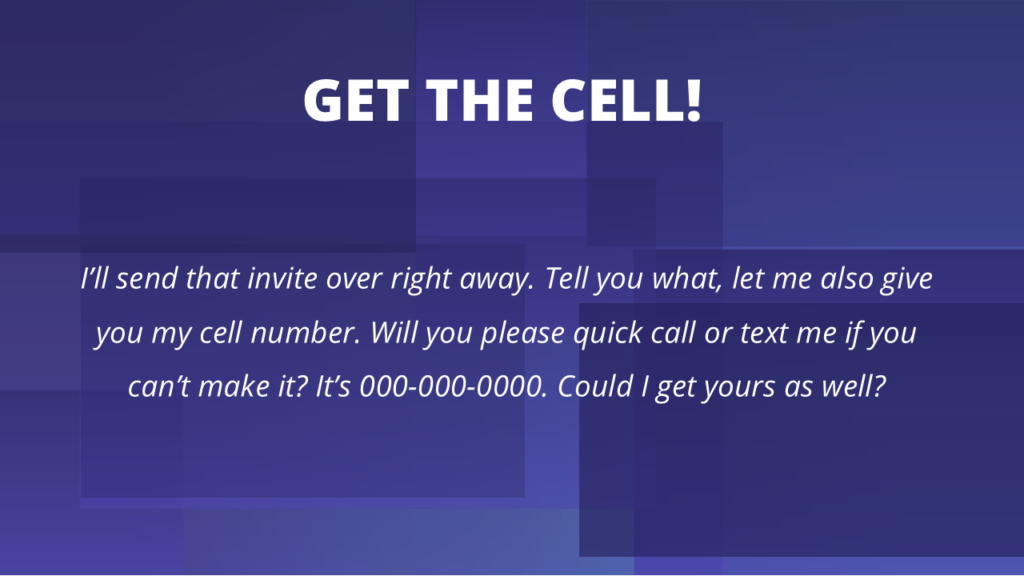
Combine the 4 Cs with these three steps, and you’ll ensure that every call ends with a solid plan and keeps your deals moving forward. No more ghosting, no more stalled deals!
2. Get a Customer Commitment
Don’t let the conversation end without getting a customer commitment. It’s simple: give them a little “homework” before the next call. When you ask a prospect to bring something to the table for your next meeting—like competitive pricing or feedback from their team—you secure mindshare.
Why does this work? People are less likely to ghost you if they’ve agreed to do something for the next step. It turns your prospect into an active participant, making them more invested in the process and, ultimately, the deal. This tactic keeps things moving forward while solidifying your partnership.
Here’s another way to think about it: Imagine your friend invites you to a party and asks you to bring the beer. You agree, but when the day comes, all you want to do is stay home in your sweats and binge Netflix. Then you remember, you promised to bring the beer, and your friend is counting on you. So, you get up, get dressed, and head to the party, knowing they’d be upset if you bailed after committing. That’s how mindshare works. By giving you a responsibility, your friend increased the chances you’d follow through.
Securing even a small commitment can be the difference between a deal that fizzles out and one that’s locked in with purpose and momentum.
TIP: Take our 15-minute online course “Getting Deals Moving” to get more customer commitments
3. Re-engage Prospects
When a deal stalls or a prospect ghosts, it’s easy to assume all is lost. But a stalled deal doesn’t mean a dead deal! To re-engage those quiet prospects, you need to get creative and tune into buying signs and signals. What’s going on under the surface? Are they asking about functionality or delivery times? Are they showing glimmers of interest but not committing? Recognizing these signals helps you approach the next touchpoint strategically.
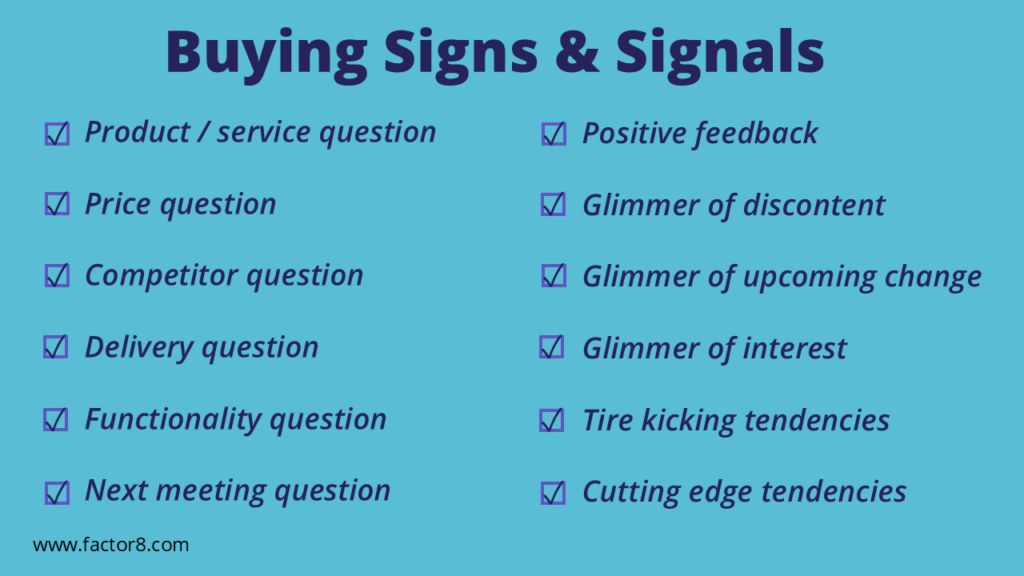
Mix up your communication channels and don’t just stick with email. Reach out through LinkedIn, send a personalized video, or even text (that is, if you’re text buddies). Keep your messaging light but direct. Something like, “Hey, are you buried in work? Let’s reconnect when you’re ready,” shows empathy. Or, if you want to go a bit bolder, say, “Did I drop the ball somewhere?” to draw out what’s really happening.
Urgency also plays a role here. Is there a deadline approaching or a new feature/product that could catch their attention? Mention that to reignite their interest and get them back in the conversation. And when you do get them back on the phone, don’t book them two weeks out. Leave room for urgent follow-ups so you can capitalize on those buying signals.
READ: How to Quickly Transition to Close on Sales Calls
In this tough sales environment, deals won’t close themselves (in fact, only 10% of customers close themselves). You need to be proactive in securing next steps, getting commitments, and re-engaging prospects when things slow down. Whether it’s using the 4 Cs to bridge every call, locking in a prospect’s commitment with small tasks, or mixing up your re-engagement tactics, these strategies will get your deals moving and keep them on track for a win.
The insight in this article was shared in our webinar, “3 Tips to Get Deals Moving NOW (So You Hit Quota!)”
Watch it here: https://factor8.com/get-deals-moving-workshop/
Subscribe to our email list to receive new content, webinar invites, and training offers.
Call Bridging 101: Paving the Way for a Follow-up Sales Call
What is Call Bridging?
Call bridging is the art of gaining the next call before leaving the current conversation. It’s a critical skill if you’re used to face-to-face selling and now working the phones.
In my previous posts, I talked about call productivity and setting call goals as critical skills when transitioning from traditional selling to virtual selling. It’s because we often accomplish less on phone sales calls than in traditional face-to-face sales meetings. But we only build a pipeline when we’re able to execute multiple calls. The key to getting multiple calls is Call Bridging.
Call bridging happens at the end of a call. It’s a key phrase or question that paves the way for calls #2, #3, etc.
How to Use Call Bridging to Secure a Follow-up Sales Call
When it’s an established relationship, it’s as easy as setting up the next meeting. The key here is being sure you’re showing value during the ask. Everyone is busy and we’re easier to blow off (blow out for my UK friends) when we’re on the phone. It sounds like:
“This has been fantastic Mr. Customer. Thanks for the insight. We didn’t get a chance to cover XYZ, nor for me to share some insights I’ve gained from my network that I think you’ll find valuable. Let’s set up a follow-up call. Does this time next week work for you?”
Note: We aren’t saying that we need to cover key insights about our product or service. We aren’t saying we need to learn more to sell more. We’re offering “cross-pollination” value or the voice of our collective customer in the industry. This intel is a hot commodity!
If it’s a colder outreach, we may need to be more assumptive and simply GIVE ourselves permission. It sounds like:
“Thank you for your time and insight. I’ve learned so much from you and want to return the favor. I’ll call you back later this week so we can finish up.”
There are a million variations of this. Think of them as bases. A home run is their agreement to a follow-up, an appointment set and on the calendar, AND they bring another party to the call or take an action item (we call this “Getting Deals Moving” – Check out The Sale Bar for a full class on the subject)
Third base might just be an agreement to meet and an appointment set.
Second is their agreement to take your call.
First base is them basically NOT saying, “No, don’t call me back.”
Make it a habit to always bridge to the next call. Go for the home run and even if you land at second you’re doing better than starting over cold.
Bonus tip: Send the calendar invite even if they don’t agree or accept the invite. It will show up on their calendar even if they don’t accept it and they may be more willing to pick up the phone when you call (you MUST call during this time! Don’t just set a task to follow up, put it in your calendar too!). And if they don’t pick up, you’ve at the very least gained some mind share and a little bit of guilt on your side. When they do finally take your next call, they may even apologize and/or be a touch more open.
Subscribe to our email list to receive new content, webinar invites, and training offers.
3 Tips to Get Deals Moving NOW (So You Hit Quota!) [Webinar Recording]
3 Tips to Get Deals Moving NOW (So You Hit Quota!)
[Video Recording]

6 Logistics Sales Tips to Master Phone Selling
Freight and logistics sales has undergone a massive change in the past few years. As companies embrace digital transformation, in-person sales meetings are falling in frequency. So you’re probably spending a lot more time on the phone than before.
This can be…how should I put it…intimidating? 😱 Or at the very least, uncomfortable?
So here are six logistics sales tips to help you crush cold calls and reach those tough-to-crack prospects.
(Psst! Interested in logistics sales training? We can help! Contact us today.)
1. Don’t stop calling
For sales calls, the third time isn’t the charm. You have to call someone at least six times before you get a response. Not just for cold leads, but warm leads too.
People are shocked when I say this. But think about it: when was the last time you called someone once and immediately got a response? (I’m gonna guess it doesn’t happen that often.)
Over 36% of purchased leads receive no sales contact. And it’s not because reps are lazy. It’s because we’d rather go after the low-hanging fruit for immediate results. But there just isn’t enough low-hanging fruit to go around. If you want consistent results, you’ve got to climb a little higher. That’s why I recommend 10 touches for A leads, 8 for B leads, and 6 for C leads…as a bare minimum.
READ: How to Build an Account and Lead Qualification Strategy
2. Leave a voicemail and send an email—every time
Yes, you read that right. Every time. It’s easy to ignore a missed call. It’s harder to ignore several missed calls, multiple voicemails, emails—you get the picture. If you’re going to invest the time in making several hundred calls a week, make it hard for them to forget it.
Think of the voicemail as a resume. It’s there to show who you are, what differentiates you, and what value you offer. If you put it in front of them enough times, the prospect is more likely to pick up. Once that happens, then you can start selling.
WATCH: How to Leave Voicemails that Get Returned
3. Be patient.
In a virtual environment, sales cycles can be longer than traditional, F2F approaches. So when you make 100 calls in a day and don’t hear anything, don’t worry! Eventually, you’ll call someone enough times and they’ll pick up (even if it’s because they feel guilty 😉). At that point, you can make them feel like they’re the one doing you a favor by taking the call.
READ: Quick and Effective Voicemail Scripts
4. Keep your intro and pitch SWIIFT℠
Salespeople often talk about “engaging prospects.” But what does “engage” actually mean? It’s simple: An engaged prospect is a talking prospect. And what’s the best way to get someone talking? Ask them a question.
So instead of going through your usual dog-and-pony show, use the SWIIFT℠ methodology (So, What’s in it for Them?) to flip the conversation around. SWIIFT℠ gets the prospect to answer 2-5 short, closed questions to get the conversation going. This helps you build the necessary rapport and understand the prospect enough to demonstrate your value.
READ: The SWIIFT℠ Selling Methodology
5. Don’t “check in” with prospects.
Be real: how many times have you jumped at the chance to “check in” with a sales rep? Yeah, me neither.
If you’re going to ask for your prospect’s time, you better give them a good reason to get on the line with you. So start brainstorming how you can add value to them:
- Address a specific issue they raised last time you talked
- Update them on new and improved features
- Talk about something in the news and how you can respond to that
- Share something you learned from another client—a kind of cross-pollination
Don’t just call to sell something. Call to add value…real value.
DOWNLOAD: 20 Value-Add Reasons to Call Your Customers
6. Make the most of short calls
In virtual sales, the average first call is three-and-a-half minutes. If you last that long, you’re doing great.
You may wonder: what could I possibly get done in such a short amount of time? In reality, you only have to do three things:
- Differentiate yourself
- Get a commitment for the next step
- Book the next call
Commitments change depending on where the buyer is in the journey: set up a demo, loop in other stakeholders and decision-makers, read over a contract, or even sign and onboard. But every call you make needs to involve getting some kind of commitment. Then, you use that commitment to bridge to the next call.
So there you go. Follow these six tips, and I promise you’ll be crushing those sales calls. Happy selling!
Watch The Video Below For More Logistics Sales Tips.
Subscribe to our email list to receive new content, webinar invites, and training offers.

The Importance of Scheduling Next Steps in Sales
I can’t tell you the number of calls that I listen to (or receive) where salespeople do not schedule next steps before ending the call. It’s so basic, so fundamental, yet so often neglected.
READ: Call Bridging 101: Paving the Way for a Follow-up Sales Call
Whether it’s an initial cold call, a discovery session, a product demo, or (I shudder at the thought) a proposal review, the lack of direction is startling.
Below I’ll share the importance of next steps, why reps aren’t doing it, and how managers can ensure their reps are scheduling next steps.
The Importance of Concrete Next Steps in Sales
- Efficiency: A streamlined sales process is gold. According to CSO Insights, having a defined sales process can increase win rates by up to 15%. Concrete next steps are a cornerstone of this process.
- Commitment: When both parties agree on a specific next step, there’s a subtle commitment. This can increase the chances of a deal moving forward.
- Clarity: With clear next steps, there’s no ambiguity. Both the rep and the prospect know what’s coming next.
So, Why Aren’t Reps Doing It?
- Fear of Commitment: Some reps fear that setting a concrete next step might deter prospects. They think staying “open-ended” gives prospects breathing room.
- Lack of Confidence: A rep unsure of the call’s outcome might hesitate to suggest the next step, fearing rejection.
- Overlooking the Basics: Surprisingly, some reps get so engrossed in the conversation that they forget this fundamental step.
How to Ensure Reps Schedule Next Steps
- Sales Training: Make next-step training a part of your regular sessions. Emphasize its importance, backed by data. For instance, Hubspot reports that 40-50% of sales go to vendors that respond first. Concrete next steps ensure you’re always a step ahead.
- Role Play: Include the process of setting next steps in your role-playing exercises. Make it second nature.
- Call Monitoring & Feedback: Use call monitoring tools to track how often reps set concrete next steps. Provide feedback and reinforcement.
- Celebrate Wins: When a rep successfully moves a deal forward due to well-defined next steps, celebrate it. Let it be a lesson for the whole team.
READ: Tips for Mastering Call Coaching
The sales dance is a series of well-coordinated steps. Missing one can mean stumbling or even falling flat. As someone who’s been in the sales arena for years, I can’t stress enough the importance of clear next steps. It’s not just about closing the current call; it’s about paving the way for the next one. So, let’s get back to basics, prioritize efficiency, and drive our sales with precision.