
Call Goals
Fall in Love With Prospecting: 5 Tips to Make Filling the Pipeline Suck Less [Webinar Recording]
Fall in Love With Prospecting:
5 Tips to Make Filling the Pipeline Suck Less
[Video Recording]
7 Phone & Video Prospecting Tips for Sales Reps to Crush It
Plenty of sales reps love the convenience of email and LinkedIn prospecting. But poorly crafted, AI-generated messages do little to build rapport and trust with your prospects.
That’s why, as much as some people despise it, you have to pick up the phone.
As young reps continue to phase into the sales force, there is a growing challenge for them to get beyond the keyboard. And while the pandemic certainly didn’t help matters, fostering those face-to-face (or voice-to-voice) connections has become more critical than ever.
Suffice it to say that salespeople can’t afford to rest on their laurels. We have to fight harder to build pipeline, persuade prospects, and win deals.
That means moving from behind the keyboard, picking up the phone, and utilizing videos in prospecting.
If you’re ready to crush it, here are seven tips that can help our reps make the most of phone and video in their prospecting efforts.
1. Don’t rely on email alone
It’s important to connect with people on social and email, certainly. But think about it: when’s the last time you bought something over email?
Never mind that people are wary of scammers and phishing attempts. No one buys from text on a screen.
People buy from other people. More importantly, they buy from people they trust.
That doesn’t mean you shouldn’t use email. But there are ways to make email more engaging and personal.
For example, emails that use video get a 96% higher click-through rate than those that don’t. It makes sense: video shows off your face, which helps to foster that personal connection.
So if you’re relying on a “spray and pray” approach to email where you’re sending as many as you can hoping for something to stick, just stop. You’ve got way more tools at your disposal.
2. Make your videos watchable
Just getting started using video in your prospecting efforts is a great first step. But if you really want to maximize your chance of success, then you need to make your videos as watchable as possible.
Most people drop off of videos 70-80% of the way through. So it’s important to structure your video so you get their attention and deliver necessary value as quickly and efficiently as possible—before they click away.
Here are some tips to make your videos more watchable:
- Start with empathy. Show the prospect that you truly understand the problem they’re facing.
-
- Lead with value. Catch the prospect’s attention by offering something to help with that problem as early in the video as possible.
- Use a list to structure your video. “3 things before our call tomorrow,” or “4 things I noticed on your website.” That will help make the video more scannable and increase the prospect’s likelihood of retaining that information
- Caption your video. Adding captions to videos can increase the watch rate by up to 80 percent. Captions also help with scannability.
- Put your call-to-action in the middle. It logically makes sense to throw the CTA at the end. But by that point, most people have dropped off. Put it in the middle to increase the likelihood that people will actually see it.
3. Use the prospect’s name off the bat
The first few seconds of a video are key to getting your relationship with the prospect off on the right foot. One great way to do this: use the prospect’s name.
This goes back as far as Dale Carnegie: people perk up when they hear their own name. When you use their name, you set the tone of the relationship as a familiar one, which increases their likelihood to trust you.
What’s more, when you use a prospect’s name in a video, it’s proof that you aren’t batch-sending messages. You’re taking the time to record a personalized message, which shows that you’re putting effort into building that connection.
WATCH: 10 Tips for Building Human-to-Human Connections on Sales Calls
4. Don’t just call prospects once
It’s no surprise that phone calls used in tandem with email help to increase the likelihood of a response.
The problem, however, is that only 10% of sales reps make more than three attempts to reach a prospect. Calling more than three times may seem like a lot, when you consider that it takes anywhere from seven to fourteen touches to get a conversation with a prospect, then frequent follow-up is key to making that conversion.
Also remember that while email and social media are powerful tools, they have one purpose: to get you on a call with the prospect. That’s the only way you’ll be able to sell them.
5. Don’t waste time following up if your data is incorrect
Spray and pray is popular because it’s quick and easy. Even if half the data is incorrect, you’re spending so little time on each prospect that it nets out positive.
But when you’re taking the time to follow up multiple times, record videos, and build relationships with prospects, investing in the wrong people can be a significant time sink.
That’s why it’s important to do your homework. One tip we recommend at Factor 8 is if you get a voicemail, hit the 0 button to find the directory or talk to someone else in the company.
What I tell people is: try to be James Bond for about 10 dials. You’re going to learn something critical that will help you find the right person or provide you with important information that you can then use to land the deal:
- Who reports to who?
- What system do they have?
- How long has your decision maker worked there?
- Are there any current projects that are a priority?
- How many employers/locations are there?
- Other key influencers that you should include in the process?
Use your personality, talk to people, and get some critical account information that can help you become more successful as you build your relationship with them over time.
READ MORE: How to Use Sales Intelligence to Boost Profits
6. Qualify, qualify, qualify
First of all: sales qualification is not the same as lead qualification. The latter is a marketing indication that a prospect may be ready to buy due to their engagement. Sales qualification is about how much money you can make with a particular account—what’s the potential that they’ll buy from you?
There are a number of factors that go into play here:
- Size of sales team—more reps means more revenue
- Is the company B2B or B2C?
- What tools or platforms does the company already have (especially important if you sell SaaS)?
- Do salespeople have to acquire their own tools or does the company provide them?
One great tip for this: don’t blow past the gatekeepers! In your haste to get to the decision maker, you may end up missing the opportunity to gain some vital information on the company that can help you tailor your video and phone communications.
READ MORE: How to Build an Account and Lead Qualification Strategy
7. You were hired for your personality—use it
If marketing could source leads and close deals on their own, we wouldn’t need sales.
The reason you have a job is because salespeople can do something marketers just can’t. You weren’t hired to send canned messages. Marketing can do that more efficiently than you.
Salespeople are there because personality makes a huge difference in how prospects feel about potential vendors. For many businesses, it’s the people that are the differentiator between themselves and their closest competitors.
So let people get to know you. You’ve been hired to be a personality. Use it!
If your sales team struggles to use phone and video effectively, Factor 8 can provide the training and resources needed to get everyone up to speed. Learn more about our training and coaching services here.
Subscribe to our email list to receive new content, webinar invites, and training offers.
4 Steps to Asking Better Sales Discovery Call Questions
Prospecting discovery is drastically different from pipeline discovery. If you’re selling something new and you’re leading with the standard exploratory questions that everyone else already Googled, you’re probably not getting through #5 on your list of top ten questions. Stop getting shut down on your BDR, SDR, AE, ISR, Acquisition (really, any new prospect) calls!
The key is to stop focusing on the benefits of your solution and start thinking about what motivates human beings. Because nobody likes change for change’s sake. We NEED motivation!
READ: 5 Questions You Should Never Ask on a Sales Discovery Call
If my cell phone provider called me right now with a better plan or phone that cost nothing more, I wouldn’t change. Why? Because changing phones or plans is a thorn in my side. Changing your grocery store sucks, new apps frustrate me, even changing lanes is a hassle. How often do you change the route you drive for fun? Bought Toyota for decades? On your third Labradoodle? Human beings resist change. It’s a fact.
Just because you have something awesome, it doesn’t mean I’ll lift a finger to get it. That includes listening to you, learning more, attending a demo, or giving you five more minutes.
So what will motivate someone not expecting your call to consider giving you their most precious resource (time) to learn about something they haven’t thought once about in the past month?
PAIN motivates change.
Only, not the pain everyone else is talking about. Discomfort or dissatisfaction is just one of four ways to get the meeting. And it isn’t the most successful. Let’s dig in.
- Problem: they have a challenge you can solve (normal pain)
- Avoiding disaster: there’s a challenge coming and you can prevent it (top motivator)
- Improve life: Your solution makes their life easier, better, or gives that appearance
- Newness: It’s all about the FOMO with these folks
Let’s take a look at each for a moment. Join me in thinking about PAIN in a whole new way!
Problem: We all have business challenges and goals, but we don’t start actively looking for solutions until it really hurts or someone has given us a deadline. Sure, I could save on electricity costs with an AC tune-up, but it doesn’t HURT until the unit is broken, I get an outrageous bill, or my spouse tells me to get it fixed or sleep outside. So, the seller’s job when it comes to a problem is to:
- Make it hurt more
- Sell the relief
- Push a deadline
- Show pending disaster (check out A: Avoiding disaster)
We do this with smart discovery questions about costs, timelines, potential disasters, and a better life on the other side. Find the root and push on it a bit. For example, if I spend $200 / month on electricity and a new unit could save me 10%, I’m not terribly motivated by a mythical $20. But if you find out my highest bill, and make it an annual number, I am wasting over $600 a year! Maybe I’d love to not worry about cranking it down a few extra degrees this summer and not spending a dime more. What if my unit is already twelve years old and the average only lasts ten? What happens to my pets, my kids, my candles, and my marriage when we spend a week without AC in July? Find the right path and venture down it one question at a time.
Avoiding Disaster: Penalties, losses, or threats are widely cited as human beings’ biggest motivator. (Really, the threat of losing $1000 beats the chance of winning $1000 every time). So how can we do that in sales? Our questions uncover the plan for the future and help prospects see the very real threat of loss. Most units go out in July and August, what’s the high temp in my area? Have I had any experience with this in the past? Maybe a horror story or two? Any kids or pets to worry about? Surely a fifteen-minute appointment or other low-cost tune-up is worth avoiding the serious health threats and expense of a unit that quits during the Memorial Day BBQ…
Improve Life: This is my #1 winner. I’m a working mom desperate to save some time or make things easier. Maybe you can help me make more money? Help me look good to my boss? Enjoy my commute? Love coming to work? Sell it, sister, how do you make me happier? If you’re a student of Factor 8’s SWIIFT℠, nearly all the business values play here. Smart sellers ask questions about the current state, what I like, what I don’t, and how it could be better. They paint pictures of the future utopia and help me see an immediate and big benefit in exchange for a short meeting.
Newness: These seekers are easy. They just can’t help but kick some tires on new technology. I think they’re looking for what’s newer while standing in line at the Apple store. So use your questions to find out if they’re a bleeding edger or late adopter and dangle some newness. It’s as easy as, “Have you seen the new ______?” You’ll know when they jump on the line.
READ: How Pipeline and Prospect Discovery Questions Are Different
Remember, the goal of a prospect call is to find one raised corner on an otherwise smooth surface. Just enough of an edge that you can use questions to pry up the corner a little and get the meeting. If you’re leading with your product benefits, you’re banking to close only the people literally searching for your product right now. Every few hundred calls and you’ll get one. Quadruple your chances by also looking for the rest of the PAIN with the folks avoiding disaster, seeking improvement, or loving newness.

Subscribe to our email list to receive new content, webinar invites, and training offers.
6 Logistics Sales Tips to Master Phone Selling
Freight and logistics sales has undergone a massive change in the past few years. As companies embrace digital transformation, in-person sales meetings are falling in frequency. So you’re probably spending a lot more time on the phone than before.
This can be…how should I put it…intimidating? 😱 Or at the very least, uncomfortable?
So here are six logistics sales tips to help you crush cold calls and reach those tough-to-crack prospects.
(Psst! Interested in logistics sales training? We can help! Contact us today.)
1. Don’t stop calling
For sales calls, the third time isn’t the charm. You have to call someone at least six times before you get a response. Not just for cold leads, but warm leads too.
People are shocked when I say this. But think about it: when was the last time you called someone once and immediately got a response? (I’m gonna guess it doesn’t happen that often.)
Over 36% of purchased leads receive no sales contact. And it’s not because reps are lazy. It’s because we’d rather go after the low-hanging fruit for immediate results. But there just isn’t enough low-hanging fruit to go around. If you want consistent results, you’ve got to climb a little higher. That’s why I recommend 10 touches for A leads, 8 for B leads, and 6 for C leads…as a bare minimum.
READ: How to Build an Account and Lead Qualification Strategy
2. Leave a voicemail and send an email—every time
Yes, you read that right. Every time. It’s easy to ignore a missed call. It’s harder to ignore several missed calls, multiple voicemails, emails—you get the picture. If you’re going to invest the time in making several hundred calls a week, make it hard for them to forget it.
Think of the voicemail as a resume. It’s there to show who you are, what differentiates you, and what value you offer. If you put it in front of them enough times, the prospect is more likely to pick up. Once that happens, then you can start selling.
WATCH: How to Leave Voicemails that Get Returned
3. Be patient.
In a virtual environment, sales cycles can be longer than traditional, F2F approaches. So when you make 100 calls in a day and don’t hear anything, don’t worry! Eventually, you’ll call someone enough times and they’ll pick up (even if it’s because they feel guilty 😉). At that point, you can make them feel like they’re the one doing you a favor by taking the call.
READ: Quick and Effective Voicemail Scripts
4. Keep your intro and pitch SWIIFT℠
Salespeople often talk about “engaging prospects.” But what does “engage” actually mean? It’s simple: An engaged prospect is a talking prospect. And what’s the best way to get someone talking? Ask them a question.
So instead of going through your usual dog-and-pony show, use the SWIIFT℠ methodology (So, What’s in it for Them?) to flip the conversation around. SWIIFT℠ gets the prospect to answer 2-5 short, closed questions to get the conversation going. This helps you build the necessary rapport and understand the prospect enough to demonstrate your value.
READ: The SWIIFT℠ Selling Methodology
5. Don’t “check in” with prospects.
Be real: how many times have you jumped at the chance to “check in” with a sales rep? Yeah, me neither.
If you’re going to ask for your prospect’s time, you better give them a good reason to get on the line with you. So start brainstorming how you can add value to them:
- Address a specific issue they raised last time you talked
- Update them on new and improved features
- Talk about something in the news and how you can respond to that
- Share something you learned from another client—a kind of cross-pollination
Don’t just call to sell something. Call to add value…real value.
DOWNLOAD: 20 Value-Add Reasons to Call Your Customers
6. Make the most of short calls
In virtual sales, the average first call is three-and-a-half minutes. If you last that long, you’re doing great.
You may wonder: what could I possibly get done in such a short amount of time? In reality, you only have to do three things:
- Differentiate yourself
- Get a commitment for the next step
- Book the next call
Commitments change depending on where the buyer is in the journey: set up a demo, loop in other stakeholders and decision-makers, read over a contract, or even sign and onboard. But every call you make needs to involve getting some kind of commitment. Then, you use that commitment to bridge to the next call.
So there you go. Follow these six tips, and I promise you’ll be crushing those sales calls. Happy selling!
Watch The Video Below For More Logistics Sales Tips.
Subscribe to our email list to receive new content, webinar invites, and training offers.
4 Time-Saving Sales Prospecting Strategies
Can you guess what percent of sellers HATE prospecting?
(Hint: it’s not 100% – that was my first guess) But it is the majority of sellers…
64%!
Yet 100% of managers DO say that sellers need to prospect more (and be better at it – if you’re one of those managers, contact us. We can help 😉)
So what can you do?
It all starts with planning.
In order to get better results without feeling like you’re wasting hours, you’ve got to put some work in ahead of time. But have no fear, there is a way for you to plan for prospecting without being part of that 64% hating it along the way (and if you already are, maybe this article will change your mind!)
Check out these top 4 sales prospecting strategies to help speed things up.
WATCH: Sales Shot – Power Prospecting
Drastically Underprepare
Yep, read it again. Think about it this way: what’s your main goal when you pick up the phone? The obvious answer is to entice them to set up meeting 1. But that’s probably a pretty unlikely accomplishment with just one phone call.
What’s the most likely case? You’re going to get their voicemail!
READ: 4 Quick and Effective Voicemail Scripts
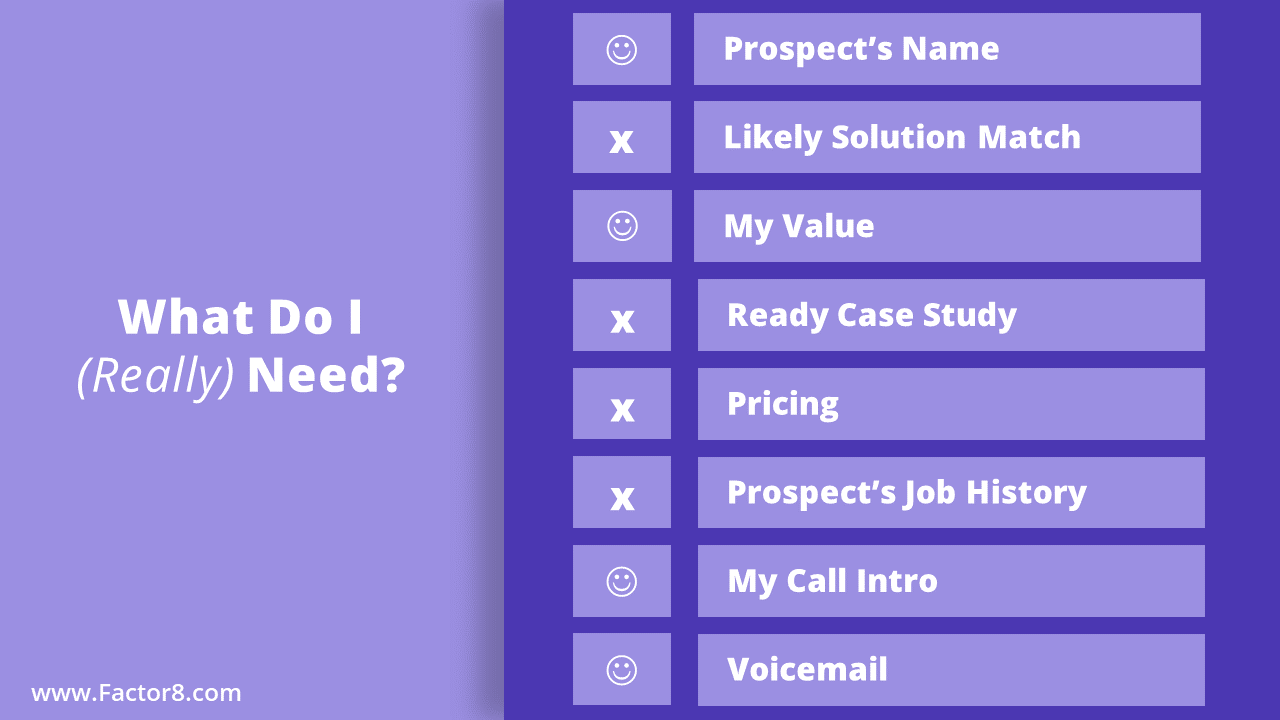
With speed in mind, think about the key elements you need to craft and leave your voicemail during your prospecting. Here’s a list of the usual suspects with a breakdown of why you do or don’t need them.
- Name – This one is pretty obvious. Know their name when you call! (But guess what? Sometimes you don’t even need this when they’ll repeat it in their voicemail!)
- Solution Match – If they aren’t even on the phone, you’ve got nothing to diagnose for them, so you don’t need it yet.
- Value Prop – YES! (SWIIFT℠ everyone!) What value are you bringing them? An absolute must. A whopping 74% of buyers will choose to work with sellers who are the FIRST to add value according to Corporate Visions.
- Case Study – Sure, a ready case study is helpful, but do you really want to bog down your call OR voicemail by spitting out stats? They don’t care yet! Skip it.
- Pricing – Again, hard to know what they need yet, and that doesn’t lend itself well to providing pricing.
- Job History -Spoiler: it’s not needed! Focus instead on one quick rapport builder.
- Call Intro – Make sure you have this down pat.
- Voicemail – ALWAYS leave a voicemail! Otherwise, the effort you put into making this call goes right down the drain. You’re not buying a billboard to leave it blank, are you? (Shameless plug: your voicemail is 3x more likely to get returned when you take our class, Messages That Get Returned, which we offer in our eLearning platform, The Sales Bar)
READ: Best Sales Scripts To Get A Buyer’s Attention
So to summarize – when you pick up that phone, know their name, have your value prop handy, your call intro, and a voicemail if all else fails. Save the image below to help you remember.
Group Your Leads
Make it easier on yourself by grouping your leads together. Here are some quick categories to organize them by:
- CRM History
- Trigger Event (did they all attend a conference? Fill out an inbound lead form?)
- Profile/Demographics
- Offer (do you have an incentive to offer when you reach out to them?)
- Location (do you have a rep going to that location soon? Perfect time to reach out!)
- Social Connection (mutual friend, past acquaintance, school history, etc.!)
READ: Build A Lead Qualification Strategy
Group Your Research
When you do your research, your first instinct might make you feel like you HAVE to give individual attention to every single person and potential lead. Guess what? You don’t!
Easily group call goals, qualify & explore questions, voicemail scripts, and your SWIIFT intros.
What should you individualize? The rapport builder – it’ll be unique for each person.
Boom, you just saved yourself a whole lot of time!
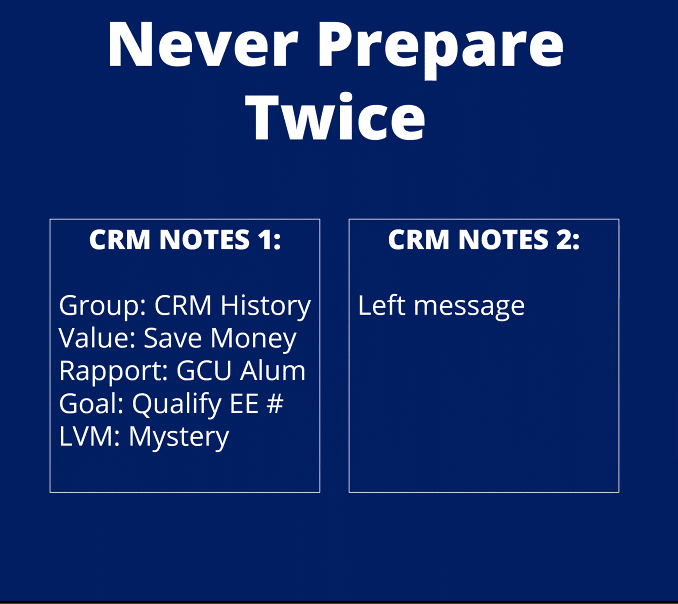
Never Prepare Twice
Be nice to future you! By taking better notes and including specific details about the voicemail you’ve previously left, you’ll never be left scratching your head wondering what you’ve already done and having to double back.
Here’s what to include:
- What group is your lead in
- What value prop did you use
- What was your rapport builder
- What was your call goal
- What type of voicemail did you leave

BONUS: Always Add Value
Seems like a no-brainer, right? You always want to call to add value to your prospects. Try the following:
- Interact with them on social media – comment and share their posts
- Recognize something – give a compliment!
- Customize your request
- Be brief
- Always GIVE something first
- Ask short and closed questions to get them talking
Bottom Line
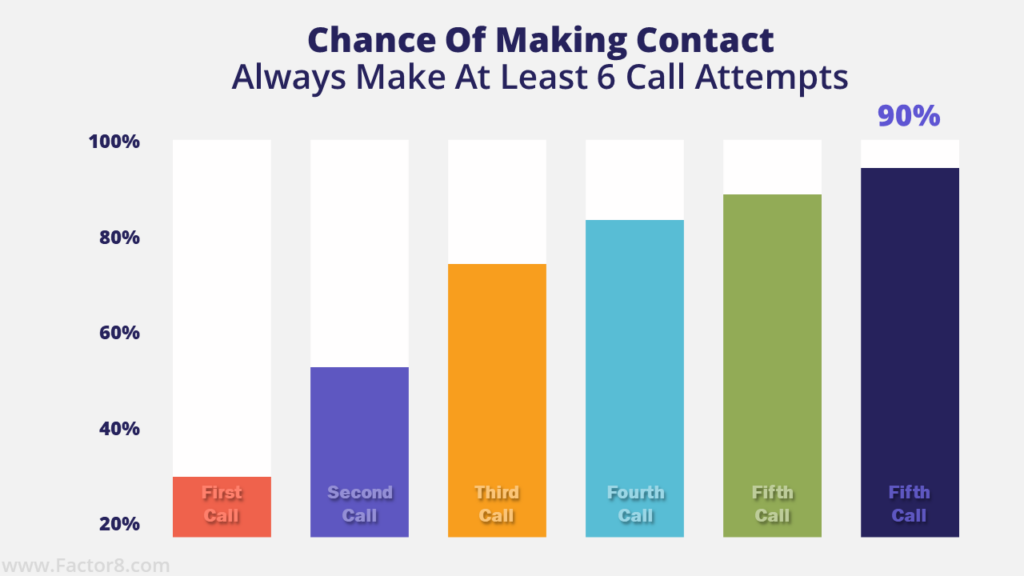
Prospecting is always going to be a numbers game. Remember: it takes 6-9 times to get to 90% of the people on your list! Put in the work – but don’t worry about putting in extra.
Subscribe to our email list to receive new content, webinar invites, and training offers.
Quick Sales Voicemail Tips to Build Phone Confidence
Whether you’re new to phone sales or a seasoned pro, if you’re looking for tips to build phone confidence, then keep reading.
Start by setting yourself a call goal and stick to it! Always make that many calls per day.
Now, you and I both know that 80-90% of calls are going to end up in a sales voicemail, so be ready to leave one.
I cannot stress this enough: ALWAYS LEAVE A VOICEMAIL. It doesn’t count as a touch, if you don’t leave a voicemail.
And make sure it’s a “good” voicemail. If you’re not sure what that means, here are 3 traits of a good sales voicemail:
- It’s under 10 seconds
- You said their name like you know them
- You motivated them to call you back using urgency, mystery, value, or a lever
DOWNLOAD: 4 Voicemails That Get Returned [Script Samples]
Never, ever, ever pitch or sell in a voicemail. Odds are, you’ll never hear from the contact again.
So, why leave a voicemail? Well, good voicemails can lead to 3-5x more returned calls (vs. bad or no voicemails). That means that if you leave 10 voicemails every day, I promise you’ll get 3-5 more calls returned. That might not sound like great odds, but those are 3-5 more conversations that you weren’t getting before.
(Psst! Take our sales training course, Messages That Get Returned, to help you craft winning voicemails.)
So, set your call goals, take the time to craft a really strong voicemail, leave it every time, and put those notes in your CRM so you know which voicemail you left.
There’s no better way to build phone confidence than to see it work and actually get prospects and customers to call you back.
Watch the video below to see LB break down the 4 goals for leaving a sales voicemail.
Subscribe to our email list to receive new content, webinar invites, and training offers.
5 Tips to Transition from Field to Inside Sales
There’s no ifs, ands, or buts about it – virtual selling is here to stay, folks. That’s why the transition from field to inside sales is becoming more prevalent.
If you’ve spent years perfecting the art of in-person selling and are struggling (or resisting) the shift to virtual, it’s time to get on track and embrace it.
I get it – virtual selling is a whole different ball game where reaching contacts is harder, your sales cycle is longer, talk tracks are shorter, and a whole slew of other things you’re not used to.
That’s why I took 30 minutes on our recent Sales Shot to break down key virtual and hybrid work practices that will help you feel like a superstar again.
Whether you’ve been at it for a while or recently transitioned, these are tips you can start implementing RIGHT NOW to help you fill those holes in your pipeline.
DOWNLOAD: How to Sell to the CFO to Keep Deals Moving
Pick Up The Phone
Do you like baseball? (Even if you don’t, stick with me for a minute.)
Home base is closing the deal and having a happy client – but you can’t get to home base if you aren’t even on first! First base is getting someone on the phone.
Chances are, they’re not going to pick up on the first try. In fact, less than 20% will connect on that initial call. Even if it takes 12 attempts to connect – you keep calling!
Research shows that 30% of leads are never even contacted at all. That’s a ton of missed opportunity. Especially when you consider that 82% of buyers admit they bought something after a series of cold calls.
So, moral of the story: Pick. Up. The. Phone.
Always Leave a Voicemail
If you’re making all these calls, you’d absolutely better be leaving a voicemail – a GREAT voicemail. In fact, make voicemails your new BFF!
Voicemails have a few different goals. The most obvious one is getting a callback. Realistically, most of them are probably never going to get returned. But here’s what you CAN do: create a positive impression of yourself and your company, and guilt them into either picking up the phone or eventually calling back. So, get creative and make it fun!
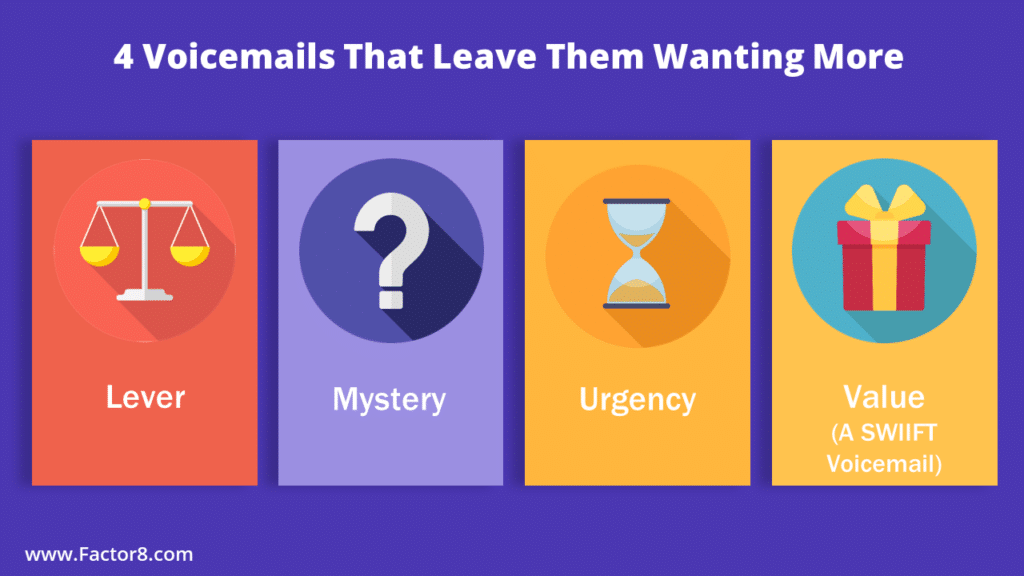
The 4 most effective types of voicemails are:
- Lever – Drop their first name, reference one of their coworkers, mention a previous rep they worked with – something that’s going to get their attention! Whatever you do, make it about them!
- Mystery – Keeping the message short and vague can pique their interest.
- Urgency – Are you running a limited promo on a product or service? Are they losing money by the minute if they aren’t using your product? Give them a reason to JUMP!
- Value – There are 6 of them we teach (remember SWIIFT℠, everyone?), but remember that during economic challenges people tend to care most about saving money and mitigating risk.
Whatever you do, ALWAYS leave a voicemail. No voicemail = no touch. It’s like buying a billboard and leaving it blank. Yikes!
Quick Tip: Send an email right after you leave a voicemail. Your likelihood of getting a response is MUCH higher when you mix voicemail + email.
Embrace Smaller Goals
A year ago, your quota probably looked a whole lot different than today. So, take your goals and break them up into smaller, more achievable pieces!
The average successful call is now just 3.5 minutes!
Structure your calls around these 3 key questions:
- What do I need to learn?
- What do I want them to know?
- What commitment do I want to close?
Qualify Your Leads
Do NOT go through an alphabetical list of prospects and pick away at it until you get to Z.
Take the time to actually qualify your leads and call based on that score! You’ll have A,B, C, and D leads (and you can probably skip the D leads). Start with your A leads and work your way down the list until you finish the C leads.
As a general rule, here’s how often to call each lead:
- A leads = 10-12 dials
- B leads = 8 dials
- C leads = 6 dials
Build A Bridge to Call #2
If you got someone talking on the phone after a cold call, the hardest part is over. So make sure you’re taking advantage of it by ALWAYS scheduling the next step WHILE you’re on the call.
Can you schedule the follow-up call now? How about sending a calendar invite with the next meeting’s info? Have you given your cell number to get theirs?
Give yourself permission to call back by urging them to look at their calendar and confirming when you’ll be connecting again.
WATCH: Transitioning from Field to Virtual Selling
Keep in mind, the more you try out these tips, the easier it gets and the more success you’ll see. So get on the virtual train with the rest of us and start building that pipeline. You got this!
Subscribe to our email list to receive new content, webinar invites, and training offers.
Top Pipeline-Building and Recession Selling Tips
Regardless of the industry you’re in, there’s no escaping the dreaded R-word: Recession.
Some industries might be struggling more than others (over 58,000 tech workers have been laid off since 2023), and those ‘other’ industries might not even be feeling the effects at all. But the bottom line is: you never know when you might be impacted by a recession or by the mitigating factors in a nervous and challenging economy.
Whether you’re in the thick of it or preparing for the worst, if you’re in sales the good news is you’ve got plenty of ways to protect the pipeline you’ve built and keep building on strong momentum.
Factor 8 Founder Lauren Bailey recently chatted with Doug Landis – advisor to the biggest and brightest SaaS startups and current Growth Partner at Emergence Capital, and Zach Miller – a 20-year enterprise-selling veteran and Vice President of Sales at Highspot. Together they compiled essential tips for both reps and managers to keep building pipeline, continue selling, and boost company culture and morale during an economic downturn.
WATCH: How To Build Pipeline And Keep Selling During A Recession
Spoiler alert: DON’T wait to implement these or fall into the analysis paralysis trap! Vigorous execution of these strategies ASAP is the best way to get ahead.
Top 3 Tips for Sales Reps
- Get Used to Selling to New Personalities
If you’re a rep, the likelihood of the CFO getting involved in your sale just got higher. They\’re often now the ones making the final decisions when it comes to implementing new tools and products and adding it to their existing budget. You may also want to get comfortable selling to procurement.
- Own Your Own Mindset
Don’t wait around for your managers to offer you more development, ask for it! If you’ve got goals you want to accomplish or skills you want to learn, do some of your own research first. Find the people who know what you want to know and utilize existing resources. Don’t make excuses for your own success – get out there and make it happen!
DOWNLOAD: Essential Virtual Selling Tips Guide
- Emphasize Loss, Not Gains
It might sound counterintuitive – but how many times do you think a decision maker has heard about all the money they’ll save if they just invest in [x] product? Probably about over a billion dollars worth! Finding ways to surpass the ROI and value your product adds by highlighting what they’re missing is the A+ solution right now.
Example: If you don’t buy today, you risk losing out on $100,000 a quarter.
(Looking for more tips on virtual selling? Factor 8 can provide the training and resources you need to excel. Learn more about our training and coaching services here. )
Top 3 Tips for Sales Managers + Leaders
- Get Involved Now
As a leader, it’s important you have a pulse on your reps’ activity without micromanaging. Both of you are in a critical atmosphere right now when it comes to sales – so make sure you aren’t waiting until there’s a problem or all hands are needed on deck before getting involved. Mitigating risk is important on both sides of the transaction!
- Protect Your Time
What’s the one thing you still have full control over? Your time! This is your best resource to utilize and protect. You may be inundated with “fire drills” from your reps – but making sure to prioritize and block off your schedule is still a crucial part of ensuring responsibilities are front and center.
READ MORE: Top 8 Sales Management Productivity Hacks
- Celebrate Wins
Quota is probably not the best way to motivate your reps right now if things are tight. So what can you do to keep culture motivated and morale high? Rethink your incentive structures! Shift from focusing on closed business to most leads, highest number of calls, or celebrate the smaller wins that might have previously been overlooked. When employees feel successful, they’ll also feel good about going back to work.
READ: Creative Tips for Rewarding Top-Performing Sales Reps
Remember: the economy is cyclical, so this downward turn isn’t forever. If you’re having a tough time adjusting to the new normal, take a deep breath and remind yourself this is a great opportunity to invest time into your personal training, building pipeline, and preparing for when business is back to booming. You’ll be ready!
Struggling to maintain your schedule? Do you want to take your team to the next level? Contact us today to learn about our available sales manager training programs.
Subscribe to our email list to receive new content, webinar invites, and training offers.
20 Reasons to Call Your Customers Now
Whether you’re an experienced virtual seller or just getting your “inside legs” after transitioning from face-to-face field selling, we all need more reasons to call our customers. This is because we don’t get to “bump into” customers in the hallways and because we tend to get less accomplished in sales phone calls (See this blog here on call goals).
So why do we need a reason to call? Because “touching base” is a mortal sin. Wait, too much? Nope, seriously not overstating that. Never ever, ever just call to check in. Your prospect’s time is valuable, and if you’ve nothing better to do than check-in, don’t call at all. (You’ll notice I’m interchanging customer and prospect in this article. Treat them the same.)
And why do we need multiple calls? Because we’re fighting “out of sight, out of mind,” and because we have our own goals to accomplish. We may not have gotten all the information we needed in our previous calls, or we may just be trying to avoid the dreaded “gone dark” that happens more in virtual selling than face-to-face.
Your goals for calling back are to get more information, get a status update, or just stay top of mind, but unfortunately, those aren’t great prospect-facing reasons to call. Doubt me? Try leaving a message like this and see if you get a call back:
“I’m just calling to get a status update and check-in. Call me back…”
You’ll be waiting a long time.
So the goal instead is to call with a customer value-add reason and then accomplish your goals. That brings us back to the topic at hand.