
3 Cold (and Warm!) Call, Email, Voicemail & Intro Scripts That WORK [Webinar Recording]
3 Cold (and Warm!) Call, Email, Voicemail & Intro Scripts That WORK
[Video Recording]
[Video Recording]

Whether you’re new to phone sales or a seasoned pro, if you’re looking for tips to build phone confidence, then keep reading.
Start by setting yourself a call goal and stick to it! Always make that many calls per day.
Now, you and I both know that 80-90% of calls are going to end up in a sales voicemail, so be ready to leave one.
I cannot stress this enough: ALWAYS LEAVE A VOICEMAIL. It doesn’t count as a touch, if you don’t leave a voicemail.
And make sure it’s a “good” voicemail. If you’re not sure what that means, here are 3 traits of a good sales voicemail:
DOWNLOAD: 4 Voicemails That Get Returned [Script Samples]
Never, ever, ever pitch or sell in a voicemail. Odds are, you’ll never hear from the contact again.
So, why leave a voicemail? Well, good voicemails can lead to 3-5x more returned calls (vs. bad or no voicemails). That means that if you leave 10 voicemails every day, I promise you’ll get 3-5 more calls returned. That might not sound like great odds, but those are 3-5 more conversations that you weren’t getting before.
(Psst! Take our sales training course, Messages That Get Returned, to help you craft winning voicemails.)
So, set your call goals, take the time to craft a really strong voicemail, leave it every time, and put those notes in your CRM so you know which voicemail you left.
There’s no better way to build phone confidence than to see it work and actually get prospects and customers to call you back.
Watch the video below to see LB break down the 4 goals for leaving a sales voicemail.
[“Sales Shot” Workshop]
[Cheat Sheet]

There’s no ifs, ands, or buts about it – virtual selling is here to stay, folks. That’s why the transition from field to inside sales is becoming more prevalent.
If you’ve spent years perfecting the art of in-person selling and are struggling (or resisting) the shift to virtual, it’s time to get on track and embrace it.
I get it – virtual selling is a whole different ball game where reaching contacts is harder, your sales cycle is longer, talk tracks are shorter, and a whole slew of other things you’re not used to.
That’s why I took 30 minutes on our recent Sales Shot to break down key virtual and hybrid work practices that will help you feel like a superstar again.
Whether you’ve been at it for a while or recently transitioned, these are tips you can start implementing RIGHT NOW to help you fill those holes in your pipeline.
DOWNLOAD: How to Sell to the CFO to Keep Deals Moving
Do you like baseball? (Even if you don’t, stick with me for a minute.)
Home base is closing the deal and having a happy client – but you can’t get to home base if you aren’t even on first! First base is getting someone on the phone.
Chances are, they’re not going to pick up on the first try. In fact, less than 20% will connect on that initial call. Even if it takes 12 attempts to connect – you keep calling!
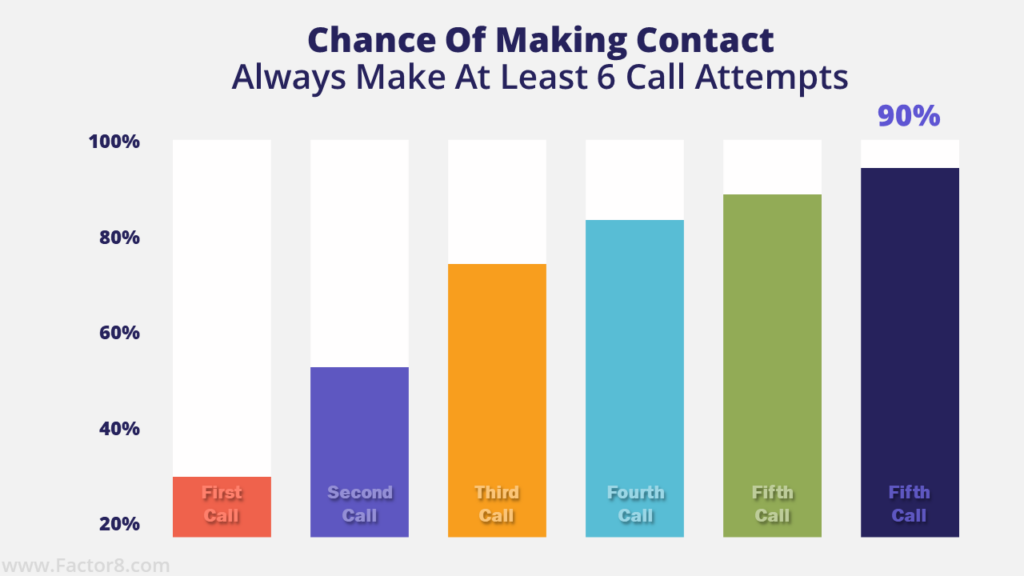
Research shows that 30% of leads are never even contacted at all. That’s a ton of missed opportunity. Especially when you consider that 82% of buyers admit they bought something after a series of cold calls.
So, moral of the story: Pick. Up. The. Phone.
If you’re making all these calls, you’d absolutely better be leaving a voicemail – a GREAT voicemail. In fact, make voicemails your new BFF!
Voicemails have a few different goals. The most obvious one is getting a callback. Realistically, most of them are probably never going to get returned. But here’s what you CAN do: create a positive impression of yourself and your company, and guilt them into either picking up the phone or eventually calling back. So, get creative and make it fun!
The 4 most effective types of voicemails are:
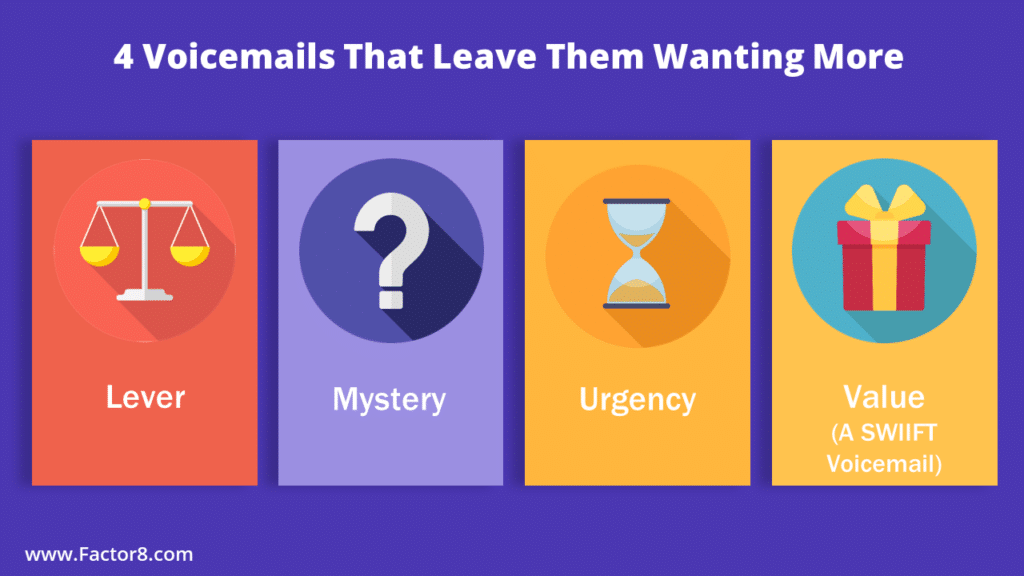
Whatever you do, ALWAYS leave a voicemail. No voicemail = no touch. It’s like buying a billboard and leaving it blank. Yikes!
Quick Tip: Send an email right after you leave a voicemail. Your likelihood of getting a response is MUCH higher when you mix voicemail + email.
A year ago, your quota probably looked a whole lot different than today. So, take your goals and break them up into smaller, more achievable pieces!
The average successful call is now just 3.5 minutes!
Structure your calls around these 3 key questions:
Do NOT go through an alphabetical list of prospects and pick away at it until you get to Z.
Take the time to actually qualify your leads and call based on that score! You’ll have A,B, C, and D leads (and you can probably skip the D leads). Start with your A leads and work your way down the list until you finish the C leads.
As a general rule, here’s how often to call each lead:
If you got someone talking on the phone after a cold call, the hardest part is over. So make sure you’re taking advantage of it by ALWAYS scheduling the next step WHILE you’re on the call.
Can you schedule the follow-up call now? How about sending a calendar invite with the next meeting’s info? Have you given your cell number to get theirs?
Give yourself permission to call back by urging them to look at their calendar and confirming when you’ll be connecting again.
WATCH: Transitioning from Field to Virtual Selling
Keep in mind, the more you try out these tips, the easier it gets and the more success you’ll see. So get on the virtual train with the rest of us and start building that pipeline. You got this!
[“Sales Shot” Workshop]
[Webinar Recording]

Every 2 years there’s a new airport sales book, am I right? The longer I’ve been around, the more I’ve watched them cycle through. Ask questions! No, share insights! Add value! Wait, actually challenge instead. I don’t think I’ve read one I find incorrect, but I’ve also never aspired to be an airport author.
To me, the methodology is always secondary to the process. Also, the sales methodology only addresses the decision-maker conversation, and in virtual selling, the conversation is less than half the battle.
I take pride that Factor 8 content helps sellers find the right people, capture new contacts, figure out who to call, how to get (and keep) their attention, and get a call back – and all of that is before conversation one! (and yes, you can buy a tool to help with nearly all of that, but trouble ensues when tools replace strategy – that’s a different blog).
All that said, we don’t have a sales call where we aren’t asked about our methodology, and this is fair. You don’t want us teaching your people something counter to your culture, your process, or your existing methodology.
So for the first time in 15 years, I’m finally defining Factor 8’s methodology. It’s called:
No, it isn’t a typo. SWIIFT℠ stands for, “So, What’s In It For Them?” and it’s the opposite of WIIFM (“What’s In It For Me”, in case you needed help with that one 😉 ). And although nobody purposely teaches reps to use the WIIFM methodology, it’s what happens in sales calls when we don’t teach them not to.
If you’re unsure what I mean, check your inbox. 99.9% of sales messages are about the rep, the company, the product, and what they want.
“I wanted to check in with you to see if you were getting enough leads because my company is helping others get leads and we’re the leading provider of leads and we’re doing an event about leads…”
This is what happens when we onboard reps with company and product information only. They go out and parrot that information. Instead, SWIIFT℠ Selling teaches sellers to always first ask, “So, what’s in this call for them?” And to re-focus a message, a call, a value prop, or a call intro into one that leads with value for the customer.
If you’re thinking, “wait, I thought value-based selling is dead,” just try letting your 24-year-old rep lead with a challenge. Ouch! Also, SWIIFT℠ Selling doesn’t mean it’s ONLY about value, it means we use value and customer centricity to get and keep attention for our discovery call and our product demo, and our closing call.
Of course, SWIIFT℠ Selling also implies speed. Bingo! This is absolutely critical in virtual selling.
You know I could go on, right? Voicemails, value props, solution proposals, objection handling…
I can’t think of a single place where keeping our focus on speed and what the customer cares about hurts us in sales.
Wait, maybe there’s a book in this after all.
Wondering what customers care about? Watch our video on Factor 8’s SWIIFT℠ Selling Six below!
[Live Event Recording]
[Cheat Sheet]