5 Ways Managers Kill Your Plans to Scale (Without Realizing It) [Webinar Recording]
5 Ways Managers Kill Your Plans to Scale (Without Realizing It)
[Video Recording]
[Video Recording]

Factor 8 today announced it has been recognized as a Leader in both the Sales Training and Sales Consulting categories in G2’s Summer 2026 Reports.
G2 is the world’s largest and most trusted software marketplace, and its rankings are based on authentic reviews from verified users.
“We’re incredibly proud to be recognized as a Leader in both Sales Training and Sales Consulting by G2. What makes this especially meaningful is that these rankings come directly from customer feedback. Nearly 20 years in, hearing how our team, training, and coaching continue to impact real sales teams never gets old. Thank you to our clients for trusting us to help develop your people, improve performance, and build stronger sales organizations. And thank you to our team working behind the scenes every day to make that impact possible.” – Lauren Bailey, Founder & CEO, Factor 8
Factor 8 earned Leader status in G2’s Summer 2026 Reports based on positive reviews from verified users and high customer satisfaction ratings compared to similar providers in the Sales Training and Sales Consulting categories.
“Earning a Leader position in a G2 Report is highly competitive and rooted in verified customer reviews,” said Godard Abel, co-founder and CEO, G2. “Congratulations to Factor 8 for achieving this distinction. Buyers can be confident this ranking reflects the authentic experiences of real users.”
About Factor 8
Factor 8 is an award-winning sales rep and management training company focused 100% on helping sales teams sell in a virtual world. They want people to love sales – and stay! They are a team of expert sales leaders who quit the daily grind so they could spend their time developing people. Together, they’ve solved the big problem: sales teams are not gaining the skills they need to quickly feel confident and successful in their roles. That means they ramp slowly and leave quickly. Factor 8 combines real-world sales experience with practical, skill-focused training that helps teams ramp faster, perform better, and stay longer.

Factor 8 is pleased to announce it has been included on Selling Power’s Top Sales Training Companies 2026 list.
“We’re proud to be recognized again by Selling Power as one of the top sales training companies,” said Lauren Bailey, Founder and CEO of Factor 8. “Sales teams are being asked to do more than ever right now. They need to prospect smarter, adapt faster, coach better, and still hit the number. That’s why we focus on practical, modern training that actually sticks and helps sellers and managers perform in the real world, not just in a workshop. Being included on this list again is a huge honor for our team and our clients.”
According to Selling Power publisher and founder Gerhard Gschwandtner, quality sales training remains paramount to B2B sales success. “With markets whipsawing and global trade uncertainty creating new headwinds, B2B revenue teams are also navigating rapid change driven by AI—new buyer expectations, faster decision cycles, and a higher bar for insight-led conversations. Building a resilient, future-ready sales organization is essential to protect pipeline and sustain growth. Partnering with top sales training companies helps ensure your teams have the skills, coaching, and AI-enabled practices to win in 2026 and beyond.”
All companies on the list submitted a comprehensive application that included a detailed listing of their offerings for both training and retention, innovative solutions, and their company’s unique contributions to the sales training marketplace.
The main criteria used when selecting the companies to include on the 2026 list of Top Sales Training Companies were:
The Selling Power team used a variety of methodologies during its evaluation process, including client satisfaction surveys and feedback from nearly 370 clients across the companies considered for this year’s list.
Feedback from Factor 8 clients included:
Selling Power magazine editors say CROs, sales VPs, and sales enablement leaders can leverage this list to find the right sales training partner to help salespeople succeed during social distancing and remote working.
See the Selling Power Top Sales Training Companies 2026 list here.
About Selling Power
In addition to Selling Power, the leading digital magazine for sales managers and sales VPs since 1981, Personal Selling Power, Inc., produces the Sales Management Digest and Daily Boost of Positivity online newsletters, as well as the leading AI sales newsletter (Subscribe to the AI 4 Sales™ / Sales 3.0 Digest – Sales 3.0 Conference / Blog). Selling Power is a regular media sponsor of the Sales 3.0 Conference, which is attended by a total of more than 4,500 sales leaders each year. https://www.sales30conf.com


Because it’s what keeps your people. Lack of training and career growth is the #1 reason reps and managers say they’d leave, and 79% of reps want more training and coaching than they’re getting.
Factor 8 surveyed thousands of sales reps, frontline managers, and senior leaders to see how sales teams are trained, coached, and developed, and where it breaks down.
want more training and coaching from their company.
don’t receive any training beyond initial new hire onboarding.
of managers say lack of training and career growth is the #1 reason they’d leave.
lack some confidence in their company’s current sales training plan.
Lack of training and career growth. It’s the #1 reason reps would leave their role, and 40% of managers say the same. Leaders see it differently: they rank compensation as the top driver of retention.
Thousands of sales professionals across every level of the sales organization, every major sales function, and companies of every size.
For 44% of reps, yes. They don’t receive any training beyond initial new hire onboarding, and 29% describe the training they did get as poor or nonexistent.
Reps haven’t given up on it, though. 79% want more training and coaching from their company.
More support, and nearly all of them say so. Managers are coaching less than leaders want, and they’re asking for the process, frameworks, and training to do it well.
Not very. 84% lack some confidence in their company’s current sales training plan. Only 16% say they’re very confident.

Building a new digital sales team from scratch is no small feat. Just ask Lisa Hubbard, VP of Sales and Marketing at Vernon Graphics & Promotions. When her team shifted toward inside and digital sales, she wanted to give them more than scripts and sales decks, but she wanted skills.
That’s where Factor 8 came in.
In this interview, Lisa shares why she chose to invest in sales training, what made Factor 8 stand out from other programs, and the lasting impact it’s had on her team’s confidence, collaboration, and results.
Prefer to watch or listen? Hear Lisa share her experience below.
We just started a digital sales team, an inside sales team here at Vernon. It was new for the company, and we felt the need to bring in robust sales training. I’ve been familiar with Factor 8 for many years, so it was a great opportunity to tap into that resource and bring their sales training to the team.
They’re our digital sales team, and they handle everything an outside account executive does, just over the phone or via Teams or Zoom.
They also take the lead on our marketing efforts. They monitor customer engagement with our campaigns, track interest from marketing emails and social posts, and connect with customers who are actively engaging with us.
What I really liked about Factor 8’s training is that it was very tactical. You learn a skill, then practice it. The modules covered all types of sales functions, like prospecting, getting through the gatekeeper, leaving a voicemail, those baseline skills you sometimes take for granted.
The team would go through a module, practice the skill, record calls, listen back, and have open discussions about what worked and what didn’t. It created great dialogue around the skills they were learning. It also helped rebuild that “muscle memory” for skills they knew but had fallen out of practice with.
They loved the hands-on practice and the discussions. It wasn’t just training, it was interactive. They could immediately apply what they learned, share what worked, and learn from each other.
The biggest change was that they kept talking about it. They still reference the training when we have lockdown days or team huddles. They remind each other, “Don’t forget your voicemail skills,” and share success stories from what they learned.
That kind of peer reinforcement has been great to see.
Confidence definitely increased. Practicing those skills helped rebuild their confidence, and hearing each other’s success stories reinforced it.
For example, someone would share, “I tried this approach, and I finally got through to the contact I’ve been chasing,” or “I asked for a referral, and it worked.” Seeing those wins motivated everyone to try new things and build on their success.
Priceless.
It’s worth every penny.
There are so many selling skills we take for granted—things we might’ve learned ten years ago but haven’t revisited. This training helps you dust those off, go back to the basics, and then build on them.
It’s absolutely time well invested.
I’ve followed Factor 8 for 15–18 years, and my experience has always been great. The training is genuine and personal. Our trainer, Steve, worked closely with each individual and made it personal to them. You can tell Factor 8 genuinely wants you to succeed, and my team felt that.
I’ve followed Lauren and Factor 8’s journey on LinkedIn for years; they’re always sharing great insights and nuggets that truly help people be more successful.
___
Lisa’s story is proof that great sales training doesn’t just build skills—it builds confidence, connection, and momentum that last long after the sessions end.
If your team is ready to level up like Vernon’s did, learn more about our customized sales training programs or reach out to see how we can help you hit your goals faster.
Special thanks to Lisa Hubbard and the Vernon Graphics & Promotions team for sharing their experience!

Scale revenue-driving behaviors with Gong Enable. Turn every rep into a top performer with enablement powered by real customer conversations. Gong uses conversation data to pinpoint winning behaviors and drive data-backed behavior change across your revenue team.
Check out their guide, ROI of sales enablement: Using AI to prove business impact, to tie enablement initiatives to growth.
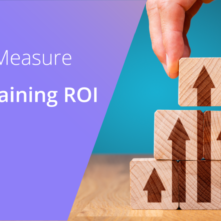
Training geeks will tell you there are four traditional ways to measure sales training ROI and the impact it has on an organization. It’s called “The Kirkpatrick Model.” In my experience, this model only includes two measurements that sales leaders actually care about. I’d like to add a few alternate levels to consider.
Level 1 is Learner Feedback. The smile sheet has more to do with liking the trainer or getting fed than the impact, and the quiz results are more about short-term memory than anyone’s understanding of how to actually apply skills.
Level 2 is Observation. What happens on the job? It’s observed behavior change, and it’s subjective. “Manager, did Bob use his new skills?” Manager: “Um, I haven’t been listening to Bob all day long, boss. I have 14 people and 200 emails to read…” You get the struggle.
Level 3 is Information Retention. New skills should be fresh in their minds and easy to execute the day after training, but what about 2 months later? 6 months? 1 year? Over time, people are known to fall back into bad habits. Truly valuable training provides easy-to-use (and memorable) skills that stick with the learner over time.
Level 4 is ROI. Calculate sales training ROI by taking the results that went up and dividing by the cost of the sales training. Naturally, there are flaws here, like, “When do we stop measuring?” “What about soft costs of missed revenue?” “What if results fall off?” and “Training wasn’t all we changed that quarter!”
When I advise sales training leaders, I help them solve it all with two little words:
“Contributed to”
Last quarter, new vendor training contributed to a 25% increase in meeting close rates and a 34% increase in show rates. Extrapolated over the period of a year and using our standard meeting to deal close rates, that means an additional 245 meetings and 66 closed deals or $3.1 million in revenue. That’s a 31x return on investment of the $100K training investment. (That’s also expressed 3,100% folks and it’s BIG. It’s also a real case study, BTW).
So, sales training ROI is a big deal. When calculating, the bottom line is nearly always revenue or profit, but there are little wins along the way. Look for bumps in any of the following (and celebrate!):
Combine these as I did over a time period of a year and the numbers get big fast. Even a modest increase in a close percentage or deal size will bring double-digit ROI.
Now for the new stuff. In today’s climate, there are 5 more sales training ROI measurements I advise you to start tracking:
Yes, nearly all of these are about helping show the link between the career development you offer the new generation of sellers and how many of them come to work for you and stay.
If you’re offering ongoing development, a training budget, a certification, or a partnership with a premier vendor, ADVERTISE THAT (you’ll attract the new generation of sellers!). Then start tracking the average number of applicants over the previous months, but don’t compare pre-COVID (that’s apples vs. bacteria).
Great development keeps people in companies longer. So count what percentage of promotions are now happening internally and whether your investments are moving the needle of employee satisfaction.
There’s a direct correlation between employee engagement (and happiness) and their performance. If they’ve been with your company for 6 years and are consistently meeting or exceeding quota, chances are they’re happy in their role and less likely to leave. Have they missed quota a few times now, or are they not as engaged with their customers as they once were? Then it might be time for a 1:1 to see what is going on behind the scenes.
Finally, my holy grail: ramp time. How long does it take a new hire to get to quota? This critical number not only impacts revenue right where it counts but also determines whether a rep stays or not. Here’s an insider tip:
People who feel successful at work will keep coming back to work.
No, not Earth-shattering, but it might be if you reverse-engineer it. 20 years ago I revamped a new hire sales training program for a computer manufacturer. It was taking reps 9 months to hit their goal. Ouch. (Best practice is 3-6 months and it’s getting longer – we’re now approaching 9 months again) Yes, we took out a bunch of filler courses and implemented my “Just in Time” training approach, but we also did something a little sneaky. We lowered the bar. The VP of Sales and I saw the mass exit happening at six months and we worked together to get reps PAID if they were on track by this point in time. The result? We cut the turnover in half.
Help people win, and they’ll stay and keep winning.
Long story long, employee development has an impact on more than just revenue. There’s a reason training investments are up over 30% as an industry over last year. And if you don’t already have your enablement team running regular reports on these new stats, I suggest you get started or you’ll be late to the party. It may feel like we’re in a war for talent, but I assure you this is only the battle. Use your training investments strategically to attract, keep, and promote your people because this precious resource will become only more scarce.
Contact us today to request information on our customizable virtual sales training programs
available for reps (and managers).

Sales metrics are your early indicators, your coaching roadmap, and your proof of sales training ROI.
They show you what’s working, where your team needs help, and whether your sales training investment is actually paying off.
But not all metrics tell the full story.
Activity is easy to measure and quota attainment is easy to celebrate. But by themselves, those numbers don’t tell you if reps are building skills, progressing deals, or gaining the confidence to hold real sales conversations.
That’s why we’re breaking down the top sales metrics to track by role.
Because every sales position contributes to pipeline and revenue in different ways, and tracking the right metrics helps you spot success earlier, coach more effectively, and tie enablement wins to revenue.
Here are the roles we’ll cover:
Let’s take the guesswork out of performance and start measuring what matters.
Confidence shows up in activity. Skill shows up in conversion. That’s why the best BDR metrics don’t just tell you how many calls they made, but what actually happened after they hit “dial.” You won’t measure all of these, but pick 2-3 that are easily reported in your world. Focus on quantity and quality.
These metrics help you go beyond the mindset of “more dials = better rep.” You’ll see who’s dialing scared, who’s winging it, and who’s actually applying the skills from training.
When BDR/SDR training is working, reps get more voicemails returned, keep prospects on the phone longer, and confidently set next steps. These are your first signs that sales training or coaching is making an impact.
READ: How to Keep Prospects on the Phone
Inside Sales Reps do it all: prospect, qualify, demo, and sometimes close. That’s why tracking ISR performance requires more than just activity. You need to know if they’re creating pipeline, overcoming early objections, and setting up seamless handoffs (or closes).
*SaaS companies will track a few additional standard metrics like Customer Acquisition Cost, Lifetime Customer Value, MRR, and Customer Churn.
These metrics show you how effectively ISRs are turning conversations into qualified opportunities and moving deals through the pipeline. They help pinpoint where in the sales process training can create the biggest lift.
When ISR training is working, you’ll hear better discovery calls, improved demos, stronger objection handling, and confident next steps. And you’ll see it in stage-by-stage conversions in your pipeline.
READ: Call Bridging 101: Paving the Way for a Follow-up Sales Call
AEs get judged by the number, but that doesn’t tell the full story. You can close a big deal and still be losing pipeline behind the scenes. That’s why it’s critical to track not just what they’re closing, but how they’re progressing deals, and where they’re getting stuck.
These metrics give visibility into each stage of the sales cycle so you can see where deals are progressing smoothly and where they may need coaching or additional support to move forward.
When account executive training is working, you’ll see cleaner pipeline stages, stronger discovery, and tighter forecasting. It’s less “I think it’s coming in” and more “Here’s where we are, here’s what’s next.”
WATCH: How to Fix the Top 5 Mistakes Made During Sales Demos
Account Managers and Customer Success Managers are the face of your brand after the deal closes. But renewals and growth don’t come from check-in emails and good vibes. These reps need to earn trust, uncover new opportunities, and consistently demonstrate value. That’s how you keep customers, and grow them.
Here’s what to track:
These metrics provide a clear picture of account health and growth potential, helping you spot risks early and identify where strategic conversations can open new opportunities.
When account manager training is working, you’ll see AMs running stronger account reviews, finding new revenue inside existing customers, and proactively addressing risks before they become churn. They’re not just retaining customers, they’re growing wallet share, keeping renewal pipelines clean, and avoiding last-minute surprises.
READ: How to Ask Existing Customers for a Sales Referral
Good managers build great reps. That’s why your manager scorecard should go beyond team quota and focus on how well they coach, develop, and retain talent. The best metrics show whether their reps are getting better, faster, and sticking around. You don’t need all of these, but pick a few that help you measure both leadership impact and team performance.
These metrics measure a manager’s impact on team development, consistency, and overall performance, giving you insight into both leadership effectiveness and team health.
When sales manager training is working, you’ll see faster ramp times, stronger forecast accuracy, and more reps hitting quota consistently. Team skills improve quarter over quarter, retention goes up, and promotions happen more often. Great managers coach with purpose, run effective meetings, and keep their teams performing without the burnout rollercoaster.
READ: Build Your Sales Manager Cadence (& Save Time and Stress)
Tracking the right sales metrics isn’t just about managing performance, it’s how you prove what’s working, where to coach, and when your sales training is actually paying off. Whether you’re investing in new training programs or reinforcing skills with your current team, these metrics are your clearest window into what’s driving real behavior change and revenue impact. Because when you can connect skill development to pipeline movement, you’re not just improving performance, you’re proving sales training ROI.